Gas Line Installation and Repair Cost in the Bay Area: What to Expect
Gas line installation in the Bay Area typically costs $1,200 to $3,500 for a new appliance branch line and $3,500 to $10,000 for a new underground service line from the meter, while most gas line repairs run $500 to $2,500. The wide ranges reflect what actually drives gas work pricing here: trench length, what the line runs under, permit and inspection requirements, and whether the project touches PG&E infrastructure. Here is a full breakdown of what to expect in 2026 across Hillsborough, Burlingame, San Mateo County, and the wider Bay Area.
How Much Does Gas Line Work Cost in the Bay Area?
| Project Type | Typical Cost Range |
|---|---|
| New appliance branch line (range, dryer, BBQ, fire pit) | $1,200 to $3,500 |
| New underground line, meter to structure or ADU | $3,500 to $10,000 |
| Gas line upsizing (tankless water heater, generator, pool heater) | $800 to $2,500 |
| Accessible leak repair (exposed pipe, crawl space) | $500 to $1,500 |
| Underground leak repair with excavation | $2,500 to $8,000 |
| Full repipe of aging galvanized or black iron system | $6,000 to $15,000 |
| Seismic (earthquake) shut-off valve installation | $350 to $900 |
| Permit, pressure test, and inspection | $300 to $800 |
The most common residential gas projects we see, an appliance line or a line upsize with permit and pressure test, land between $1,500 and $4,000. Trenched runs to detached structures, outdoor kitchens, and ADUs push into the $5,000 to $10,000 range once excavation and restoration are included.
What Drives Gas Line Costs Up?
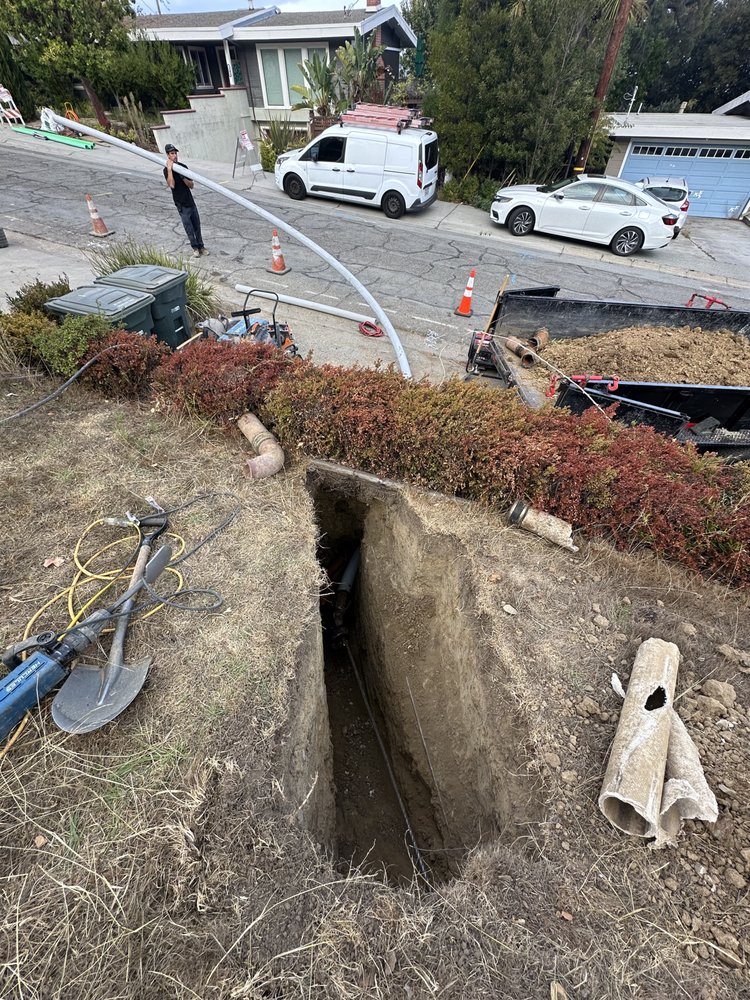
- Trench length and surface: Open-cut trenching is the standard method for underground gas lines. A 20 foot run through a planting bed is cheap. An 80 foot run under a Hillsborough driveway or paver patio means saw cutting, deeper excavation, and restoration, the same dynamics we describe in our excavation support work.
- Gas system capacity: Adding a high-demand appliance like a 199,000 BTU tankless water heater or a standby generator often exceeds what the existing meter and piping can deliver. That can mean upsizing pipe runs and coordinating a meter upgrade with PG&E.
- Pipe material and condition: Newer homes have polyethylene (PE) underground and CSST or black iron inside. Older Peninsula homes often have galvanized or original black iron that fails pressure testing once disturbed, turning a small job into a partial repipe.
- PG&E coordination: Work near PG&E facilities, new service connections, and meter relocations require an OQ qualified contractor and add coordination time. Unqualified work will not pass inspection and typically costs 1.5 to 2 times the original price to redo.
- Permits and pressure testing: Every jurisdiction in San Mateo County requires a permit and a witnessed pressure test before gas is restored. Burlingame and Hillsborough both inspect trench depth and bedding before backfill on underground runs.
- Emergency response: An active leak repair after hours carries emergency rates, and the line must be isolated, repaired, tested, and inspected before service is restored.
Installation vs Repair: How We Approach Each
New installations are planned projects: we size the line for the appliance load, trench or route it to code, pressure test, and coordinate the permit inspection. Most residential installations take 1 to 2 days of site work, plus permit lead time.
Repairs start with locating the leak. On exposed piping that is quick. Underground, we use gas detection and isolation testing to pinpoint the failure before excavating, so we dig one hole instead of three. If a buried line fails in multiple places, or the pipe is corroded galvanized, full replacement of the run is usually cheaper over any reasonable time horizon than repeated spot repairs.
Bay Area Specifics Worth Knowing
- Private vs utility side: PG&E owns everything up to and including the meter. The private side, meter to appliances, is the property owner's responsibility. We service the private side and are PG&E OQ qualified for work that interfaces with their infrastructure.
- Seismic shut-off valves: Several Peninsula jurisdictions require an earthquake shut-off valve when gas work is permitted or when a home is sold. Even where not required, on the San Andreas corridor through Hillsborough and Burlingame we consider it money well spent.
- Estate and outdoor living projects: A large share of our gas work in Hillsborough is outdoor kitchens, pool heaters, fire features, and standby generators. These are exactly the projects where load calculations and meter capacity checks up front prevent expensive rework later.
- Electrification planning: With Bay Area air quality rules phasing in zero-NOx requirements for appliances like water heaters starting in 2027, it is worth deciding which appliances stay gas before investing in new runs. Our water heater cost guide covers how those rules affect that decision.
The Gas Line Installation Process
- Load calculation and design: We size the pipe for the total connected BTU load and verify the meter can support it.
- Permits and USA markings: We pull the gas permit and call 811 to mark existing underground utilities before trenching.
- Trenching or routing: Underground runs are excavated to depth with sand bedding and tracer wire; interior runs are routed and supported per code.
- Installation and pressure test: We install the piping, then pressure test the system, typically at 10 PSI or more for a set duration, to prove it holds.
- Inspection and connection: The city inspector witnesses the test and checks the trench before backfill. We then connect appliances, purge the lines, and verify operation.
Frequently Asked Questions
Most outdoor appliance lines in the Bay Area run $1,200 to $3,500 installed and permitted. The biggest variables are trench length, whether the run crosses hardscape, and the capacity of your existing gas system.
Yes. All gas line installations, replacements, and major repairs require a permit from your local building department, plus a pressure test witnessed by the inspector. We handle the full permit and inspection process on every project.
PG&E owns the line from the street to your meter. Everything after the meter is a private gas line and is your responsibility, which is where a licensed contractor comes in. For work near PG&E facilities, the contractor must also be PG&E OQ qualified.
Exterior gas lines in the Bay Area typically require 18 to 24 inches of cover, with sand bedding and tracer wire for polyethylene pipe. Depth requirements vary by jurisdiction and by PG&E specification when the work is near their infrastructure.
Leave the area immediately, do not operate switches or open flames, and call 911 and PG&E from a safe distance. Once the line is made safe, we can locate and repair the leak, including the pressure test and permit work needed to restore service.
Planning Gas Line Work?
Whether you are adding an outdoor kitchen, upsizing for a tankless water heater or generator, or dealing with a leak, we handle the design, trenching, permits, pressure testing, and PG&E coordination end to end.
Request a free estimate or call us at (650) 532-4866, including 24/7 emergency gas response. We serve the entire Bay Area including Hillsborough, Burlingame, San Mateo, Palo Alto, San Francisco, and surrounding communities.
Learn more about our gas line services and utility trenching work, or see our other cost guides on water heater replacement, trenchless sewer replacement, and ball valve replacement.