Trenchless Sewer Repair and Replacement Cost in the Bay Area: 2026 Pricing, Methods, and Limits
Trenchless sewer replacement costs $8,000 to $16,000 for a standard residential lateral in the Bay Area, which works out to roughly $60 to $250 per linear foot depending on the method. Pipe bursting and CIPP lining price differently, qualify differently, and fail differently, and the spread between two quotes on the same house often comes down to which method each contractor assumed. If the problem is a single failure point, a sectional spot liner can solve it for $3,000 to $6,000 without replacing anything.
Maybe the camera just showed 60 feet of cracked clay running under the driveway you repoured two summers ago. Maybe a point-of-sale lateral test failed mid-escrow and the clock is running. Or maybe you are holding two bids that are $6,000 apart and nobody has explained why. This guide, built on our experience completing more than 150 sewer and utility projects across the Peninsula and greater Bay Area, covers both trenchless methods and both flavors of the work: full replacement and sectional repair.
By the end you will know what each method costs per foot and in total, which one your pipe actually qualifies for, the three camera findings that force at least some digging no matter what a salesperson promises, and how Bay Area permits and cost-sharing programs treat trenchless work. We have organized it in that order: pricing first, then the bursting-versus-lining decision, then feasibility limits, then the local rules.
The two methods price very differently, so let's start by pinning down what trenchless actually means.
What Is Trenchless Sewer Replacement?
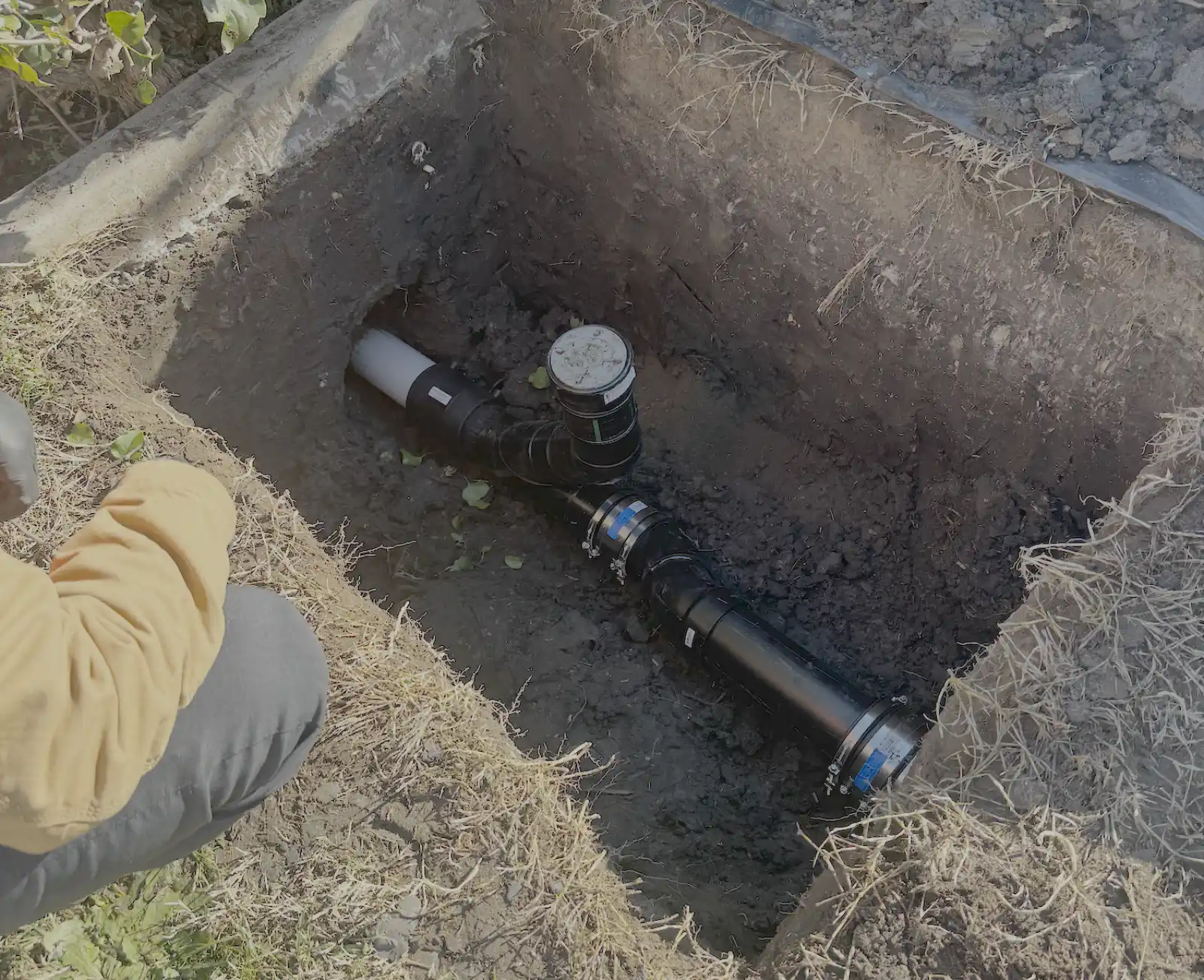
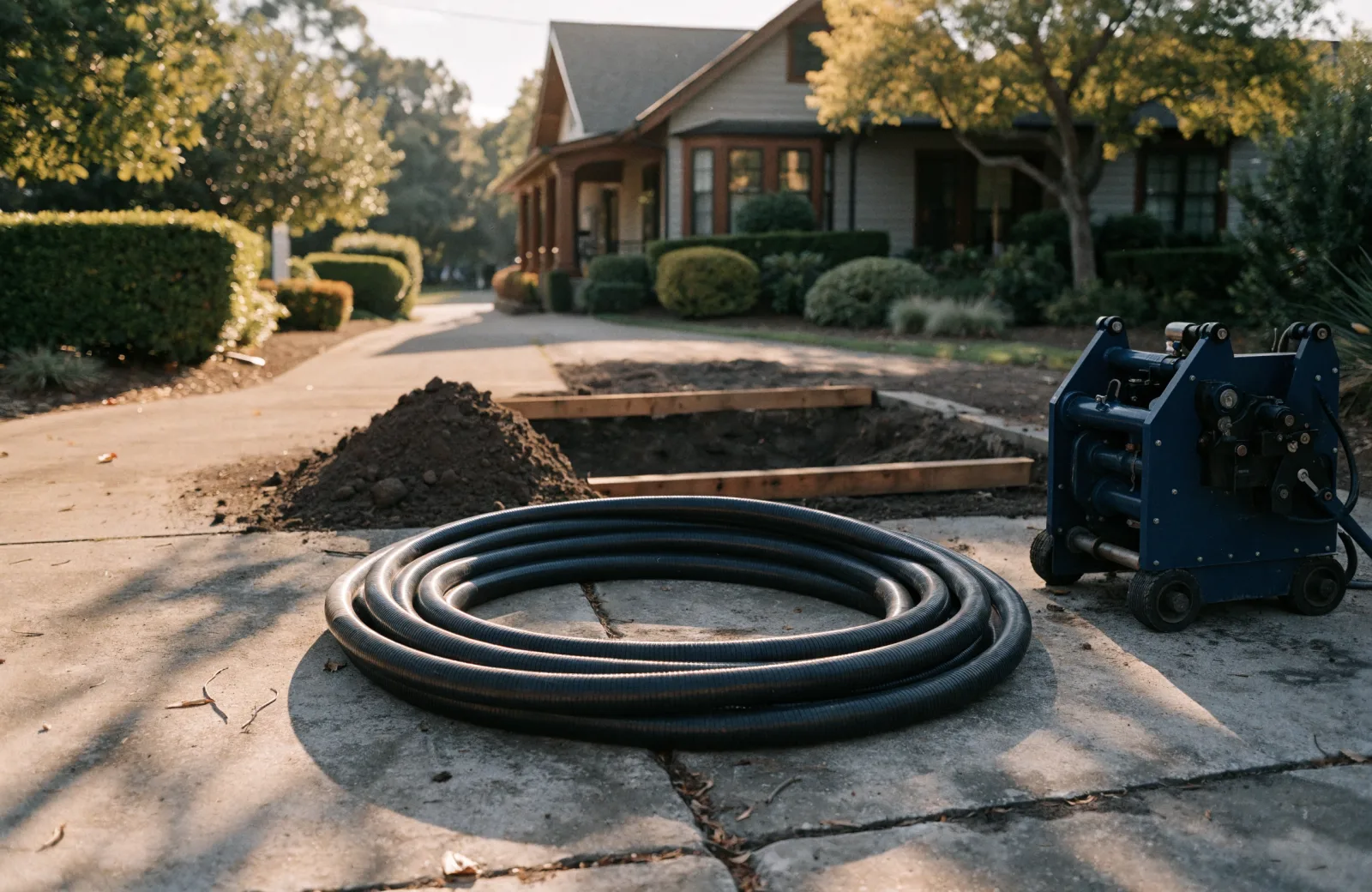
Trenchless sewer replacement renews a failed sewer lateral without digging a continuous trench along its full length. Instead of excavating 30 to 100 feet of yard, the crew works from two small access pits, one near the building and one near the property line or the connection to the public main. Strictly speaking, one trenchless method replaces the pipe and the other repairs it in place.
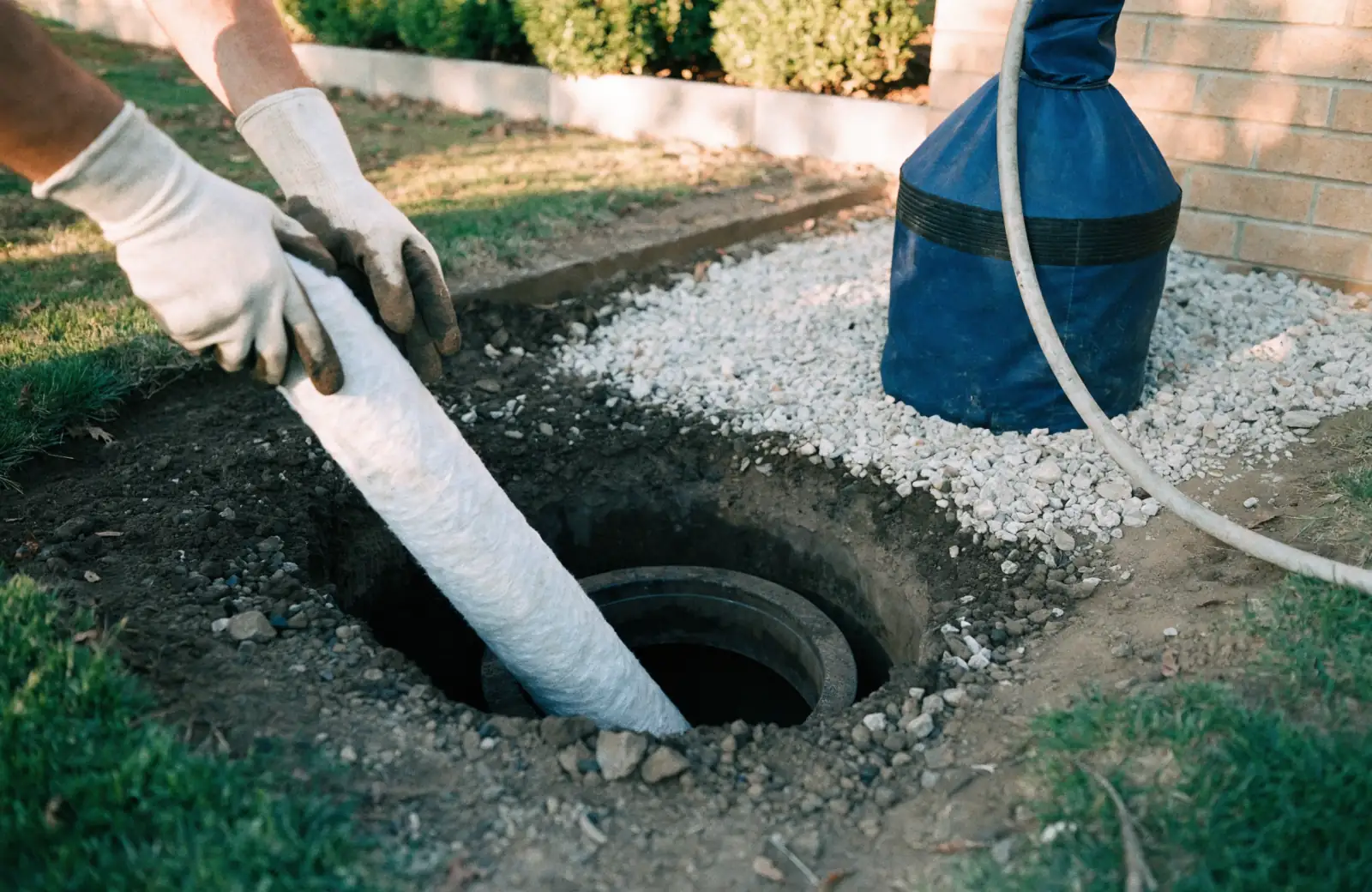
- Pipe bursting (replacement): A bursting head is pulled through the old pipe, fracturing it outward while dragging a new HDPE pipe into place behind it. The result is a brand new, full-diameter pipe along the original alignment, and it can upsize the line from 4 inch to 6 inch.
- CIPP lining (repair in place): A resin-saturated liner is inverted or pulled into the existing pipe and cured in place with hot water, steam, or UV light. The old pipe stays in the ground and becomes the host for a new structural liner inside it.
Both methods start the same way every sewer project should: with a camera inspection to confirm the pipe's condition, measure the run, and verify that trenchless is actually feasible.
How Much Does Trenchless Sewer Replacement Cost in the Bay Area?
The most common all-in range we see for a residential trenchless sewer replacement in the Bay Area is $8,000 to $16,000. Pipe bursting typically lands at $9,000 to $18,000 for a standard lateral, CIPP lining at $7,000 to $15,000, and long or deep runs push past $18,000 with either method. Here is the full breakdown from our trenchless projects in San Mateo County and the surrounding Bay Area:
| Scope | Typical Cost Range |
|---|---|
| Pipe bursting, standard lateral (30 to 60 ft) | $9,000 to $18,000 |
| CIPP lining, standard lateral (30 to 60 ft) | $7,000 to $15,000 |
| Long or deep runs (60 to 100+ ft) | $18,000 to $30,000+ |
| Sectional spot liner (single failure point) | $3,000 to $6,000 |
| Access pit excavation and restoration | $1,500 to $4,000 |
| Encroachment permits (if in right-of-way) | $500 to $2,500 |
| Camera inspection (pre and post) | $250 to $500 |
That is comparable to the $8,000 to $18,000 we typically see for conventional open-trench sewer lateral replacement, but trenchless projects rarely carry the $2,000 to $8,000 in street and hardscape restoration that open-cut projects under pavement do. Restoration, not pipe work, is what separates the two bills.
Pipe Bursting vs CIPP Lining: Cost Per Foot and Total
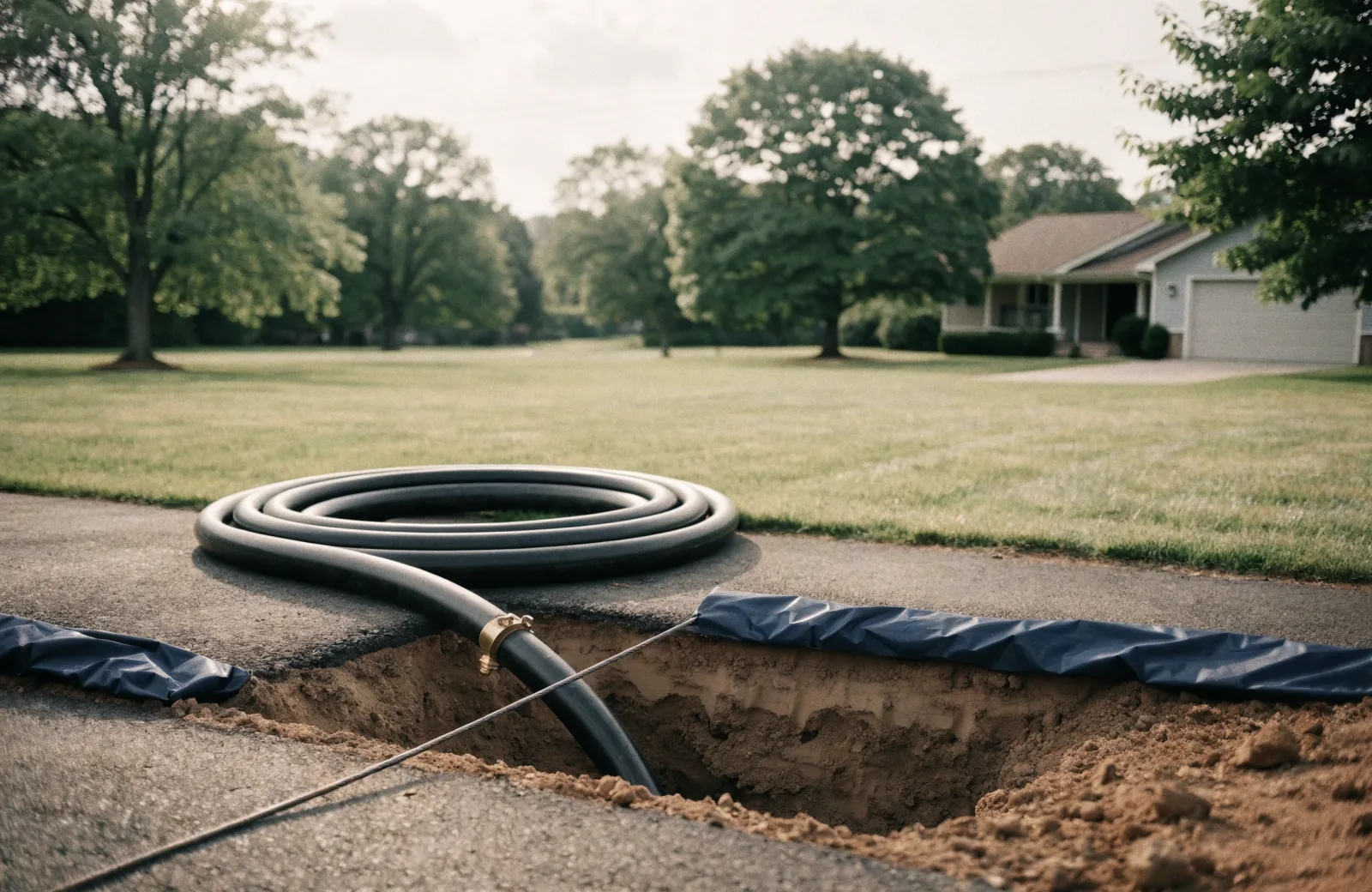
Pipe bursting costs $60 to $200 per linear foot in the Bay Area, and CIPP lining costs $80 to $250 per foot. Lining carries the higher per-foot rate, yet it usually finishes $1,000 to $3,000 cheaper on a standard lateral. The reason is the excavation around the pipe work: a liner can often be installed from an existing cleanout with one small pit or none, while bursting always needs a launch pit and a receiving pit, each with shoring, reconnections, and restoration of its own.
| Method | Per-Foot Range (2026) | What You Get |
|---|---|---|
| Pipe bursting | $60 to $200 per ft | Brand new full-diameter HDPE pipe; can upsize 4 inch to 6 inch |
| CIPP lining | $80 to $250 per ft | Structural liner inside the existing pipe; slight diameter reduction |
| Sectional spot liner | Flat $3,000 to $6,000 per section | Repairs a single failure point without touching the rest of the run |
| Open trench (for comparison) | $50 to $125 per ft | New PVC at corrected grade; full-length excavation above it |
| Project Scope | Pipe Bursting | CIPP Lining |
|---|---|---|
| Standard lateral, 30 to 60 ft | $9,000 to $18,000 | $7,000 to $15,000 |
| Long run, 60 to 100+ ft | $18,000 to $30,000+ | $15,000 to $25,000 |
| Single failure point | Usually overkill | Spot liner, $3,000 to $6,000 |
The camera decides which column you are in, not the price list. If the pipe is structurally intact but leaking at the joints or invaded by roots, and the diameter is adequate, lining is the cheaper path and the least disruptive. If the pipe is badly broken but still passable, made of deformed Orangeburg that cannot host a liner, or undersized for the home, bursting is the right call even at the higher total, because you end up with a new pipe instead of a renewed old one. And if the line has collapsed or lost its slope, neither method works, which is the subject of the next section.
Say your 1958 San Carlos ranch has a 50 foot clay lateral with roots at every joint but clean grade on the camera footage. Lining at $120 per foot is about $6,000 of pipe work, and with a cleanout access, permits, and pre- and post-cameras the project lands near $8,500. Bursting the same line at $150 per foot plus two pits would run $11,000 or more. The pipes perform similarly for the next 50 years; the $2,500 difference was the condition of the host pipe.
What Affects Trenchless Pricing?
Six factors move a Bay Area trenchless quote up or down: run length, depth, pipe condition, the connection at the main, upsizing, and soil. Here is how each one plays out on Peninsula properties:
- Length of the run: Trenchless pricing scales with footage. Hillsborough and Burlingame properties with deep setbacks often have laterals of 80 to 150 feet, which pushes projects toward the upper end of the range.
- Depth and access: The access pits still have to reach the pipe. A lateral 8 feet deep needs larger, shored pits, which adds excavation support cost.
- Pipe condition: Pipe bursting needs a continuous path for the bursting head. A fully collapsed section usually means excavating that segment conventionally before the trenchless work can proceed.
- Connection at the main: If the tap at the city or county main must be re-made, that work often happens under the street and triggers encroachment permits and traffic control.
- Upsizing: Pipe bursting can upsize a 4 inch lateral to 6 inch, which some jurisdictions require for certain properties. Upsizing adds modest material cost and pulling force requirements.
- Soil conditions: The clay-heavy soils common on the Peninsula are generally favorable for bursting, but rocky fill or engineered backfill along the pipe path can slow the pull.
When Trenchless Fails: Bellied Lines, Collapsed Pipe, and Grade Problems
Trenchless methods cannot fix a sewer lateral that has lost its slope, and they cannot pass through a fully collapsed pipe. Both bursting and lining follow the path of the existing line, so any defect in that path gets preserved, not corrected. In our camera inspections across the Peninsula, three findings disqualify a line from a pure trenchless fix:
- Bellied lines: A belly is a sag where the pipe has settled and holds standing water. A CIPP liner cures into the exact shape of the host pipe, belly included, and a bursting head follows the old alignment, so the low spot survives either method. Only open excavation can rebuild the bedding and reset the slope to the code minimum of 1/4 inch per foot.
- Collapsed pipe: Bursting needs a continuous path to pull the head through, and lining needs an open host to receive the liner. A fully collapsed section blocks both. The fix is to excavate and replace that segment conventionally, then run trenchless on the rest.
- Multiple bends and tie-ins: Every sharp bend and every branch connection along the run needs its own access pit to re-make. Past two or three of them, the pits start to add up to a trench, and open-cut becomes the honest recommendation.
Heavy root intrusion is not on that list, and that surprises people. Roots disqualify nothing by themselves: the line gets cleared and descaled with hydro jetting before a liner goes in, and bursting simply destroys the rooted pipe on its way through. What matters is what the camera shows after the roots are cleared.
Picture a 1955 ranch house in Millbrae with a lateral that runs 20 feet under lawn, then 35 feet under a stamped concrete driveway. A lining quote is on the table, but the camera finds a 12 foot belly holding standing water right at the driveway's edge. The workable answer is a hybrid: open-cut the bellied section where it sits under cheap-to-restore lawn, then burst or line the intact run under the driveway. The final cost lands between the all-trenchless and all-trench quotes, and the belly is actually gone instead of sealed in place.
Many Bay Area projects end up as exactly that kind of hybrid. Treat any contractor who quotes a full trenchless job without camera footage, or a full dig without explaining why trenchless will not work, as a signal to get a second opinion.
Trenchless vs Open Trench: Which Is Right for Your Property?
Trenchless wins when expensive surfaces sit above the pipe; open trench wins when the ground above is cheap to restore or the pipe's slope needs to be rebuilt. Across more than 150 sewer and utility projects in the Bay Area, the decision has almost always come down to those two questions.
Trenchless tends to win when:
- The lateral runs under a driveway, patio, retaining wall, or mature landscaping that would be expensive to demolish and rebuild. On Hillsborough estate properties, protecting hardscape and specimen trees is often worth more than the entire cost difference.
- The lateral crosses under the sidewalk or street, where open cutting means asphalt T-cuts, concrete panels, and city-standard restoration.
- The existing pipe is structurally intact enough to host a liner or guide a bursting head.
- You want to minimize days of disruption. Most trenchless pulls are done in a single day of active work.
Open trench tends to win when:
- The pipe has collapsed, telescoped, or lost grade (bellied). Neither bursting nor lining can fix a pipe that no longer slopes toward the main.
- The run is shallow and crosses open lawn, where excavation and restoration are cheap.
- There are multiple tie-ins, bends, or transitions along the run that would each need their own access pit anyway.
For the full open-trench side of this comparison, including per-foot excavation pricing and city permit tables, see our companion guide to sewer lateral replacement costs in the Bay Area. A camera inspection tells us which mix of the two produces the lowest total cost for your property.
Bay Area Permits, Ordinances, and Cost-Sharing for Trenchless Work
Trenchless sewer work needs the same permits as open-trench replacement in every Bay Area jurisdiction: a plumbing permit always, and an encroachment permit when the connection point or an access pit sits in the public right-of-way. The pits are inspected before backfill, and the finished pipe or liner is verified by camera, exactly as an open trench would be inspected.
- Point-of-sale rules: Cities with sewer lateral ordinances accept trenchless work the same way they accept open-trench replacement, as long as the post-work camera verification passes. The City of San Mateo's Private Sewer Lateral Ordinance has required a lateral inspection at point of sale since December 2020, and East Bay cities under the regional program require a compliance certificate before escrow closes.
- Cost-sharing programs: The City of San Mateo's private lateral cost-sharing program reimburses 50% of the lowest bid, up to $2,500, for a full lateral replacement, and it does not cover partial replacements or spot repairs. Ask the city whether your method qualifies and whether funding remains before you schedule anything.
- Inspection timing: Permit processing runs 3 to 10 business days in most Peninsula cities, USA utility markings take 2 business days minimum, and inspectors book 1 to 3 days out. The trenchless pull itself is usually the fastest part of the project.
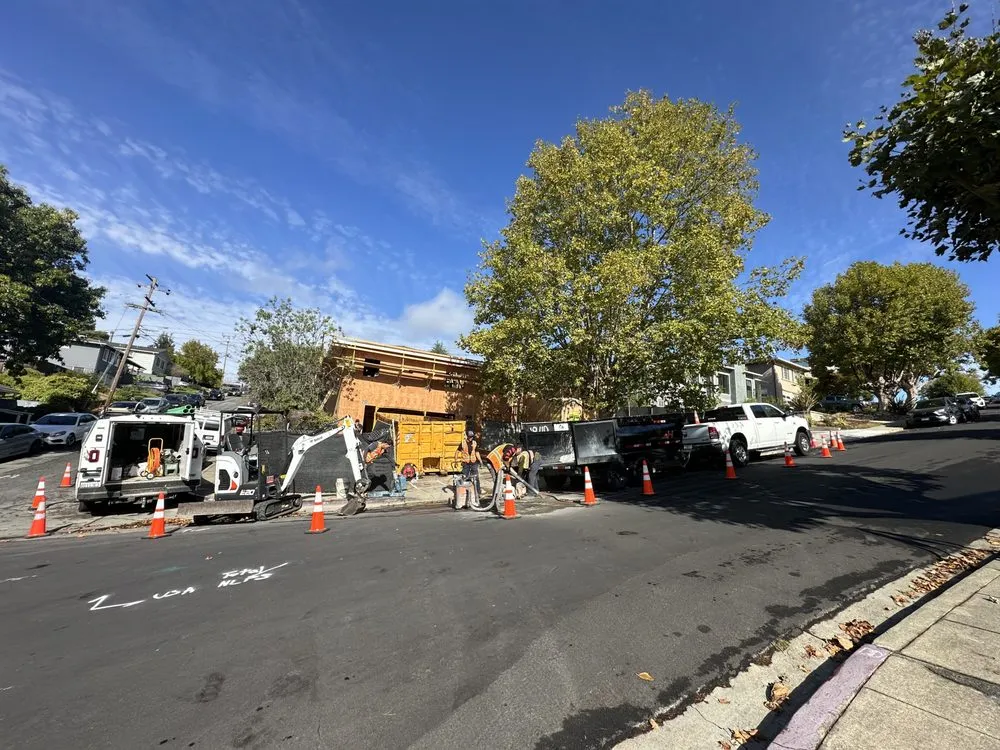
That speed is exactly what makes trenchless valuable under a deadline. Say you are three weeks from closing in San Mateo and the point-of-sale test just failed on 45 feet of rooted clay. An open trench across the front yard, with permits, excavation, inspection, and restoration, is a tight squeeze in that window. A CIPP liner can go in and be camera-verified within days of the permit issuing, which is why lining has become the default fix for failed escrow tests. We handle these deadline projects regularly through our Burlingame service area, where transfer-triggered lateral work comes up most often.
The Trenchless Process Step by Step
A trenchless sewer replacement runs through six steps, and most of the calendar time is permits and scheduling rather than pipe work. Here is the sequence on a typical Bay Area project:
- Camera inspection: We document the lateral's condition, length, depth, and material, and confirm the line is a trenchless candidate.
- Permits and USA markings: We pull the required permits and call 811 to have all underground utilities marked before any digging.
- Access pits: We excavate small launch and receiving pits, typically 3 to 4 feet square, with shoring where depth requires it.
- The pull or cure: For bursting, the new HDPE pipe is pulled through as the old pipe fractures outward. For lining, the resin liner is installed and cured in place.
- Reconnection: We reconnect the building drain and the main tap, and install a property line cleanout if one is missing.
- Verification and backfill: A post-installation camera run documents the finished pipe for the inspector, then the pits are backfilled with compaction and the surface restored.
Trenchless Sewer Replacement: Frequently Asked Questions
Not always. The trenchless work itself often costs about the same as open-trench replacement, but it eliminates most of the surface restoration. If your lateral runs under a driveway, mature landscaping, or a city street, trenchless usually wins on total cost. On an open lawn, conventional excavation is often the cheaper option.
Pipe bursting runs $60 to $200 per linear foot in the Bay Area. A standard 30 to 60 foot residential lateral typically lands at $9,000 to $18,000 all-in once access pits, permits, reconnections, and camera verification are included. Upsizing from 4 inch to 6 inch pipe adds modest material cost.
CIPP lining usually finishes $1,000 to $3,000 cheaper on a standard lateral, at $7,000 to $15,000 versus $9,000 to $18,000 for pipe bursting, because lining often works from existing cleanouts with less excavation. Bursting costs more but delivers a brand new full-diameter pipe and can upsize the line. The camera inspection determines which method your pipe actually qualifies for.
No. A collapsed pipe, a badly bellied line that has lost grade, or a lateral with multiple tight bends usually requires open excavation for at least part of the run. A camera inspection is the only way to confirm whether your line is a trenchless candidate.
Most residential trenchless projects are completed in 1 to 2 days once permits are in hand. Pipe bursting typically takes a single day of active work. Add 1 to 2 weeks up front for permits, USA utility markings, and inspection scheduling.
Yes. Trenchless work needs the same plumbing permit, and an encroachment permit if the connection point sits under the sidewalk or street. The access pits are also inspected before backfill, just like a conventional trench.
A new HDPE lateral installed by pipe bursting has a design life of 50 to 100 years. A properly installed CIPP liner is generally rated for about 50 years. Both outlast the clay and Orangeburg pipe they replace by a wide margin.
Trenchless Sewer Replacement with Next Level Plumbing
Whether trenchless saves you money comes down to three things you now know how to check: what the camera shows inside the pipe, what sits above it, and which method the findings actually support. Here is how to move forward:
- Get a camera inspection first and ask for the footage, so the method recommendation is based on evidence you can see.
- Request bids for both methods where the pipe qualifies for both, itemized so pipe work, pits, permits, and restoration are comparable line by line.
- Check your city's ordinance and the county cost-share program before scheduling, especially if a sale is on the horizon.
We run the camera, show you the video, and give you a straight answer on whether bursting, lining, a spot repair, or a hybrid costs less for your specific run, with permits and inspections handled through our sewer line services. Request a free estimate or call us at (650) 532-4866. We serve the entire Bay Area including Hillsborough, Burlingame, San Mateo, San Jose, Palo Alto, San Francisco, and surrounding communities. The payoff is a lateral that drains the way it should for the next 50 years, with your driveway and landscaping still intact.
For more Bay Area pricing guides, see our breakdowns of sewer lateral replacement, gas line installation, and water heater replacement.