Sewer Lateral Replacement Cost in the Bay Area: 2026 Pricing, Permits, and Process
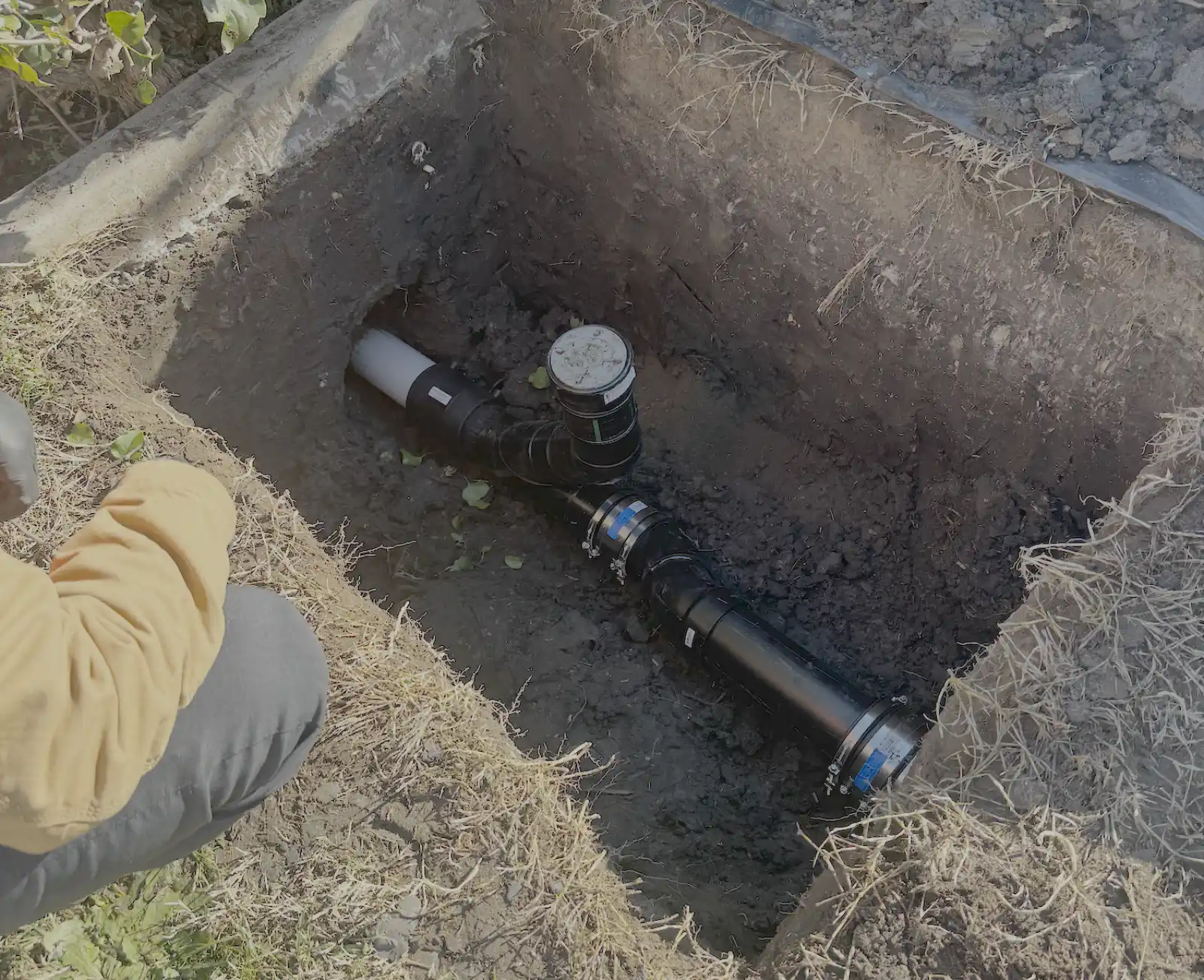
Sewer lateral replacement costs $8,000 to $18,000 for most Bay Area homes in 2026, which works out to roughly $150 to $300 per foot once permits, shoring, and surface restoration are counted. If you are staring at a backup, a failed point-of-sale test, or a camera report full of cracked clay pipe, that number is probably the first thing you want pinned down, and the second is whether your city's rules make it bigger.
Maybe your 1950s home just backed up for the third time this year. Maybe you are mid-escrow and a lateral test in San Mateo, Burlingame, or Millbrae just came back failed. Or maybe you just bought the house and inherited a problem the seller never mentioned. This guide, written from our experience completing more than 150 sewer and utility projects across the Peninsula and greater Bay Area, covers all three situations: what the work costs per foot and in total, what each city requires in permits and compliance, how open trench compares to trenchless, and how the project actually unfolds. Let's start with the short version.
Sewer Lateral Replacement at a Glance: Requirements, Cost, and Process
Sewer lateral replacement is the removal of the failed underground pipe connecting your building to the public sewer main and the installation of new pipe in its place. In the Bay Area it costs $8,000 to $18,000 for most homes and takes 1 to 3 days of site work once permits are in hand.
When replacement is required: A lateral must be replaced when it has multiple failure points, is made of deteriorated clay, Orangeburg, or cast iron, or has lost grade and backs up chronically. Several Bay Area jurisdictions also mandate a compliant lateral at specific trigger events. Oakland, Berkeley, and other East Bay cities require a lateral compliance certificate at point of sale, during major remodels, or when water service is upsized. On the Peninsula, Burlingame, Millbrae, and the City of San Mateo require a test or inspection before a sale closes, and a lateral that fails has to be repaired or replaced. In every jurisdiction, the property owner, not the city, is responsible for the lateral, in most cases all the way to the connection at the main.
What it costs: Standard replacements run $5,000 to $15,000, complex projects with deep excavation or street work run $15,000 to $30,000 or more, and the most common all-in range we see is $8,000 to $18,000. Per-foot pricing runs $50 to $250 for the pipe work itself, and $150 to $300 per foot all-in on typical Bay Area projects. The full cost tables and the factors that move the number are broken down below. If the lateral runs under hardscape or the street, trenchless sewer replacement can deliver the same result with far less surface restoration.
How the process works: Camera inspection to confirm the failure, permits and USA utility markings, excavation with shoring, new PVC pipe installed at grade, city or county inspection before backfill, then compacted backfill and surface restoration. Each step is detailed later in this guide.
What Is a Sewer Lateral?
A sewer lateral is the underground pipe that connects your building's plumbing to the public sewer main in the street. It typically runs from your house or building, under your yard, under the sidewalk, and into the city or county sewer main beneath the road.
Most sewer laterals in the Bay Area are 4 to 6 inches in diameter and buried anywhere from 3 to 10 feet deep depending on the property's elevation relative to the sewer main. Older laterals are often made of clay, Orangeburg (a tar-paper composite), or cast iron, all materials that deteriorate over time.
When a lateral fails, you will typically see sewage backups into your building, wet spots in the yard, or persistent foul odors. A camera inspection is the first step to determining whether repair or full replacement is needed.
How Much Does Sewer Lateral Replacement Cost in the Bay Area?
Sewer lateral replacement costs in the Bay Area vary widely based on project complexity. Use the interactive sewer lateral replacement cost calculator below for an instant estimate based on your lateral's length, depth, and what sits above it, then read on for the full breakdown. Here is what we typically see across our projects in San Mateo County, San Francisco, Alameda County, and surrounding areas:
Sewer Lateral Replacement Cost Calculator
Estimate your Bay Area sewer lateral replacement. Adjust the inputs for an instant range, then get an exact number with a camera inspection.
- Lateral replacement
- Shoring (deep excavation)
- Surface restoration
- Encroachment permit
- Camera inspection
Planning estimate only, based on typical Bay Area project costs. It is not a quote. Final cost depends on soil conditions, agency requirements, and what the camera inspection finds. Some cities offer rebates (the City of San Mateo reimburses 50% of the lowest bid, up to $2,500, for a full replacement), so ask us what applies to your address.
| Factor | Cost Impact |
|---|---|
| Standard replacement (30 to 60 ft, 3 to 5 ft deep) | $5,000 to $15,000 |
| Complex replacement (60+ ft, 6 to 10 ft deep) | $15,000 to $30,000+ |
| Street or sidewalk restoration | $2,000 to $8,000 |
| Encroachment permits | $500 to $2,500 |
| Shoring (deep excavations) | $1,500 to $4,000 |
| Camera inspection (pre and post) | $250 to $500 |
The most common range we see for a full sewer lateral replacement in the Bay Area is $8,000 to $18,000. Projects involving street cuts, deep excavations, or coordination with multiple agencies push toward the higher end.
Sewer Lateral Replacement Cost Per Foot in 2026
Sewer lateral replacement costs $50 to $250 per linear foot for the pipe work itself in 2026, depending on the method. On complete Bay Area projects, the realistic all-in number is $150 to $300 per foot once permits, shoring, inspections, and surface restoration are counted. National cost guides quote lower figures because they average in regions with shallow laterals, sandy soil, and permit fees a fraction of what Peninsula cities charge.
| Method | Per-Foot Range (2026) | Best Suited For |
|---|---|---|
| Open-trench replacement | $50 to $125 per ft | Laterals under lawns and open yards |
| Pipe bursting (trenchless) | $60 to $200 per ft | Runs under driveways, landscaping, streets |
| CIPP lining (trenchless) | $80 to $250 per ft | Structurally intact pipe with root or joint damage |
| Difficult access (any method) | $300 to $350 per ft | Sections under concrete slabs, retaining walls, utilities |
Say your lateral runs 45 feet from a 1950s San Mateo ranch house to the main under the street, buried 5 feet deep. The pipe work alone at $125 per foot is about $5,600. Add the plumbing and encroachment permits, shoring at the connection point, a street T-cut restoration, and pre- and post-camera inspections, and the realistic project lands between $11,000 and $14,000. That is why per-foot quotes alone can mislead: the last 10 feet under the street often cost more than the first 35 under the lawn.
What Drives the Cost Up?
Several factors can increase the cost of a sewer lateral replacement beyond the standard range:
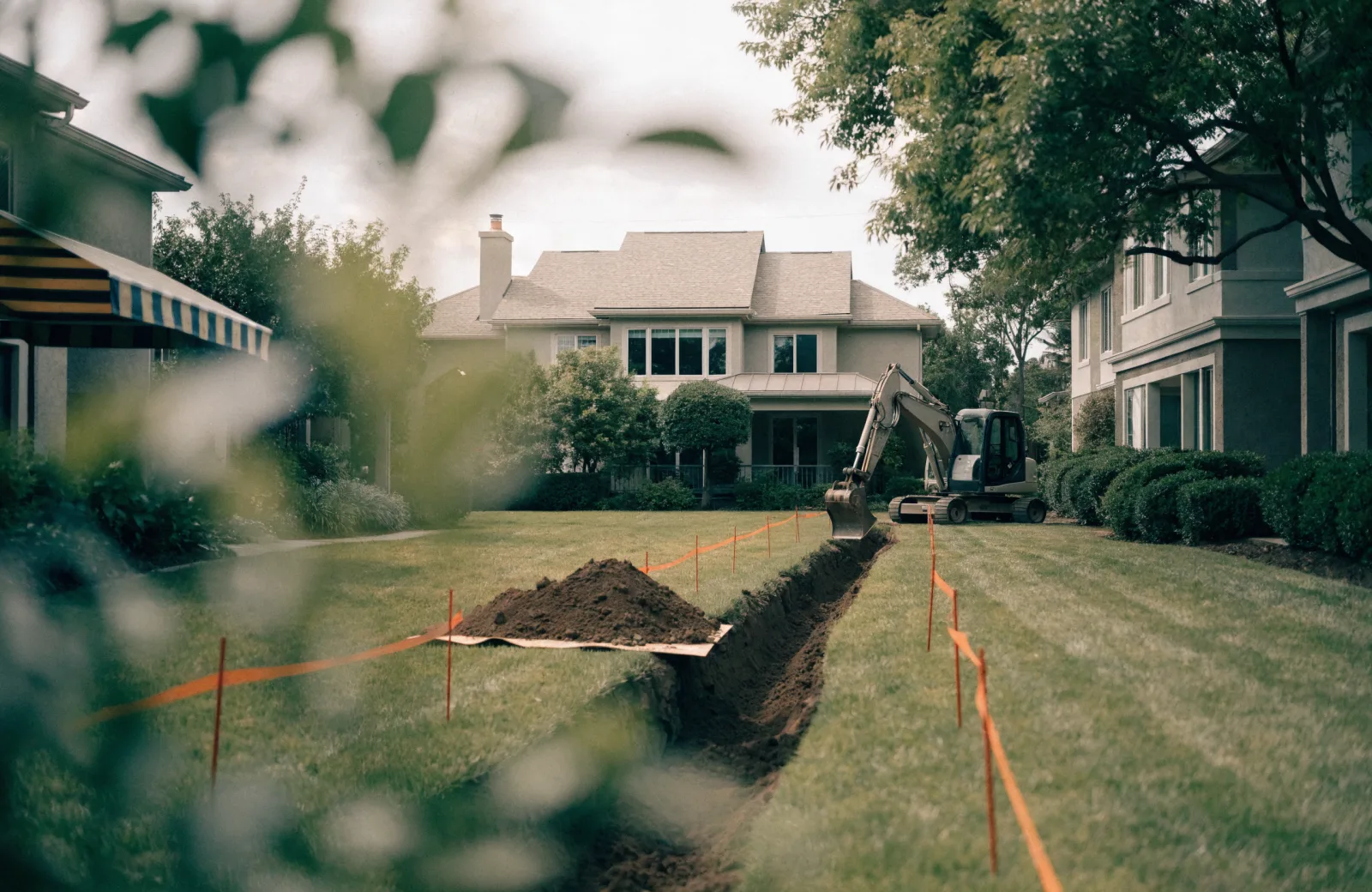
- Depth: Deeper laterals require shoring, more excavation time, and additional safety measures. Every additional foot of depth adds labor and equipment costs.
- Length: Longer runs from the building to the main mean more pipe, more trenching, and more backfill. Corner lots and properties set far back from the street tend to cost more.
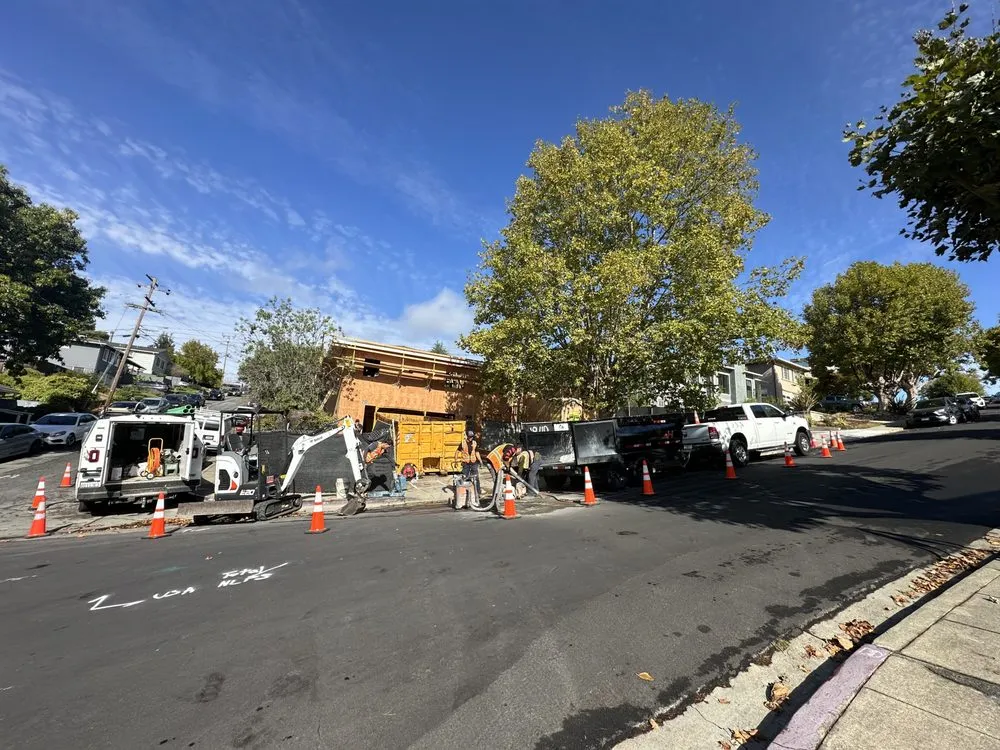
- Street and sidewalk restoration: If the lateral runs under a public street or sidewalk, you will need an encroachment permit and must restore the surface to city standards. Asphalt T-cuts and concrete sidewalk panels add significant cost.
- Permits and agency coordination: Some cities require separate sewer and encroachment permits. In unincorporated San Mateo County, for example, the county manages the sewer main connections and has specific inspection requirements.
- Soil conditions: Rocky soil, high water tables, or unstable ground require specialized excavation techniques and may slow the project down.
- Existing material: Removing old cast iron or clay pipe embedded in concrete or compacted soil takes longer than removing Orangeburg, which is often deteriorated enough to collapse during removal.
Open Trench vs. Pipe Bursting: Which Costs Less?
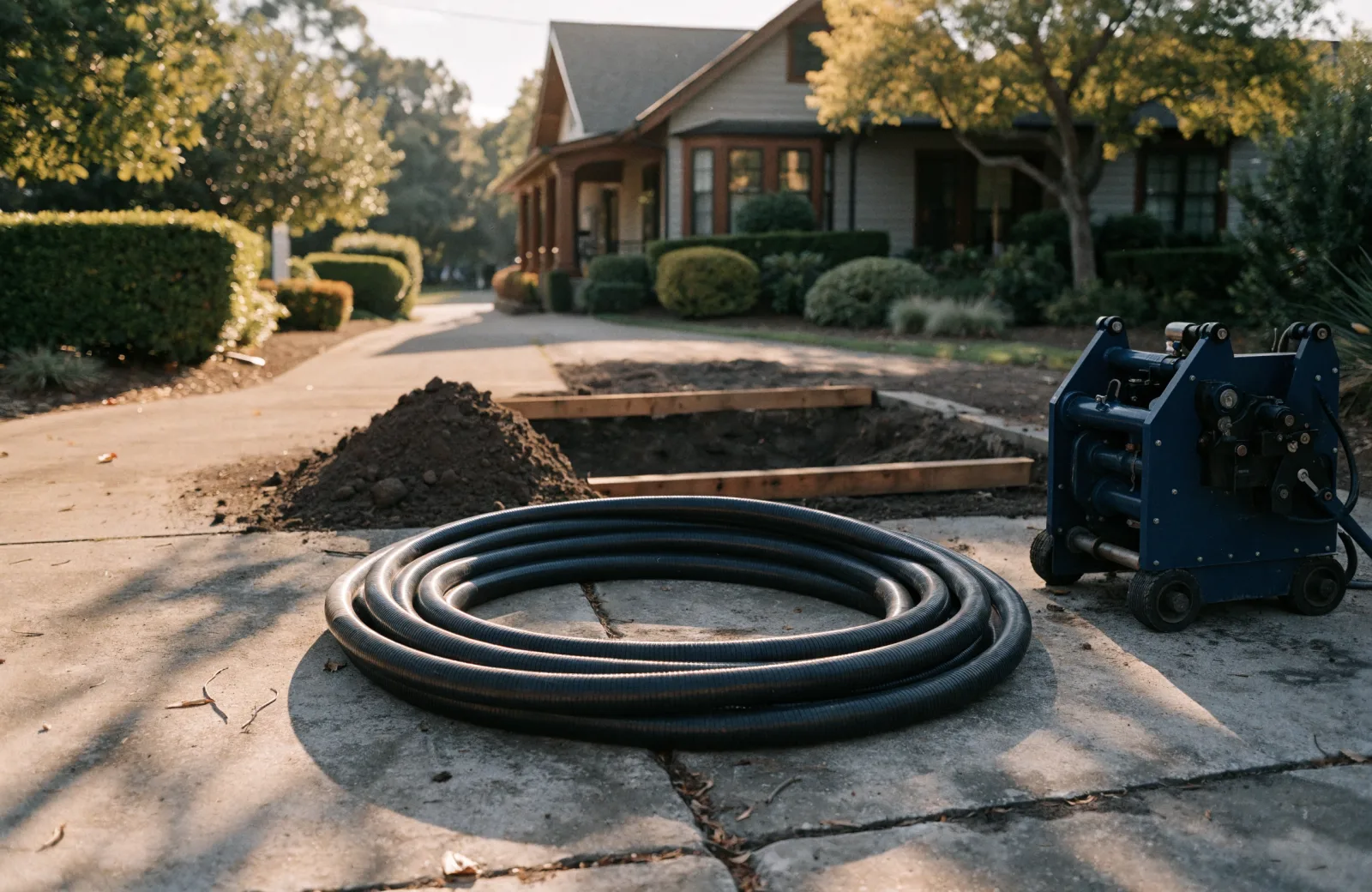
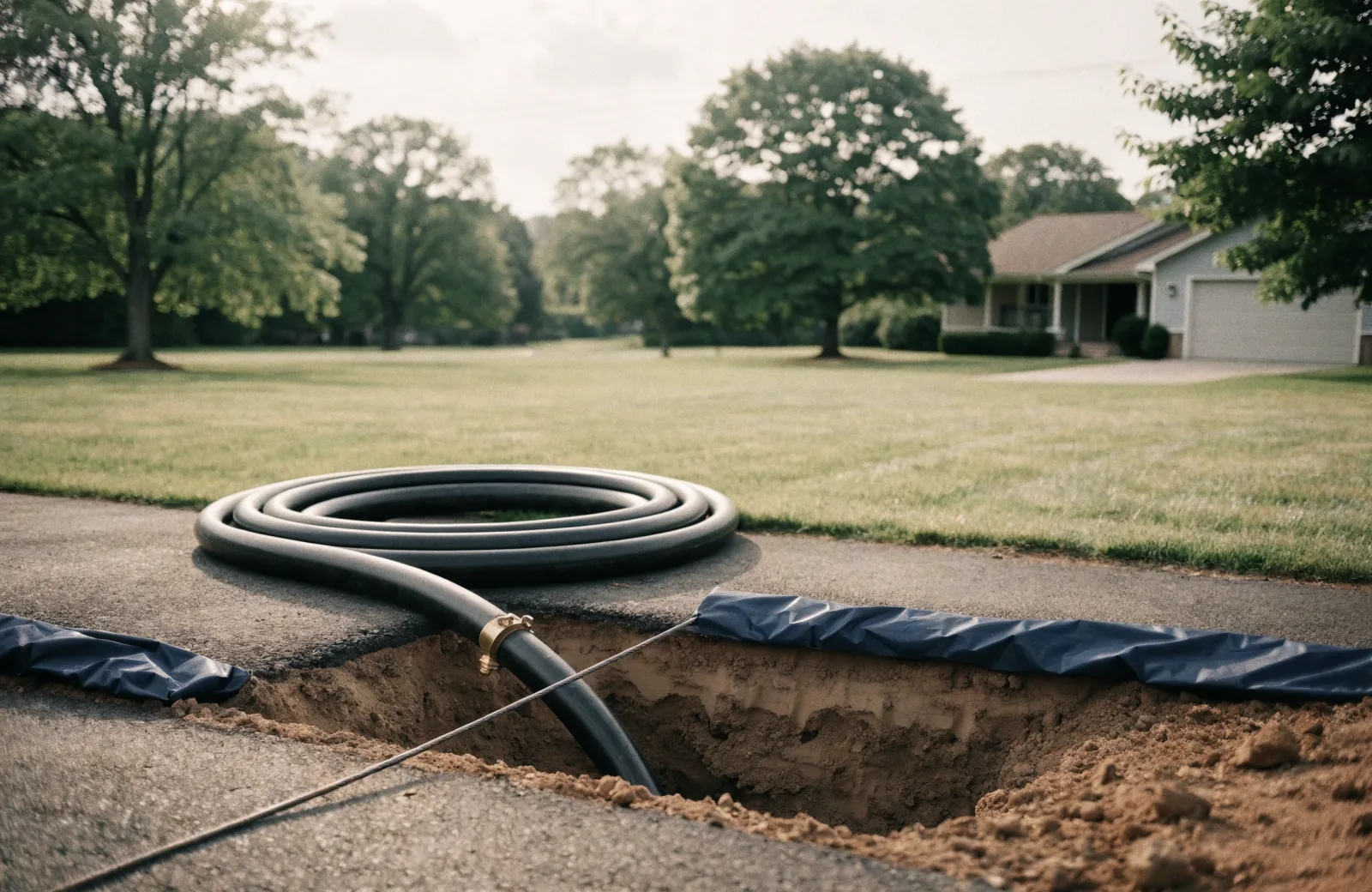
Open-trench replacement is usually cheaper when the lateral runs under an open lawn. Pipe bursting usually costs less in total when the lateral runs under a driveway, mature landscaping, or the street, because the trenchless method works from two small access pits and avoids most of the restoration bill. The pipe work itself prices similarly; restoration is what separates the two.
| Factor | Open Trench | Pipe Bursting |
|---|---|---|
| Pipe work per foot | $50 to $125 | $60 to $200 |
| Surface disruption | Full-length trench | Two access pits |
| Restoration cost | $2,000 to $8,000+ over hardscape or street | Minimal, pits only |
| Active work time | 1 to 3 days | Often 1 day |
| Result | New PVC at corrected grade | New HDPE along original alignment |
| Limitations | Everything above the pipe is disturbed | Cannot fix lost grade; collapsed pipe may block the bursting head |
Here is the branch point. If your lateral runs under open lawn and the pipe has lost grade or bellied, open trench is the right call: it costs less over soft ground and it is the only method that corrects the slope. If your lateral runs under a stamped-concrete driveway, a mature garden, or the public street, and the camera shows the pipe is deteriorated but still passable, pipe bursting usually wins on total cost even at a higher per-foot rate.
Picture a Burlingame homeowner with 60 feet of failing clay lateral, the middle 30 feet under a stamped-concrete driveway. Open trench at $100 per foot looks cheaper on paper, but demolishing and repouring matched stamped concrete adds $7,000 or more. Pipe bursting at $160 per foot skips the driveway entirely and finishes a day sooner. On paper the trenchless quote is higher; on the final invoice it is several thousand dollars lower.
We break down pipe bursting vs. CIPP lining pricing, feasibility, and when each method fails in our companion guide to trenchless sewer replacement costs in the Bay Area.
Permit Costs and Sewer Lateral Rules by City
Permits add $500 to $2,500 or more to a Bay Area sewer lateral replacement, and several Peninsula and East Bay cities also enforce sewer lateral ordinances that require testing or replacement at specific trigger events, most commonly when the property sells. Every jurisdiction requires a plumbing permit; work extending into the sidewalk or street adds an encroachment permit and city-standard restoration.
| Jurisdiction | Lateral Ordinance Trigger | What It Requires |
|---|---|---|
| San Mateo (city) | Sale, building permits valued at $90,000 or more, and two other triggers (since Dec 2020) | Lateral inspection; the city's cost-sharing program pays 50% of the lowest bid, up to $2,500, for a full replacement |
| Burlingame | Property transfer, structures 25+ years old | Infiltration test witnessed by a City representative (video inspection not accepted); repairs or replacement required to pass |
| Millbrae | Before close of escrow | CCTV video of the lateral from the building to the city main; rebate of 20% of the upgrade cost, up to $2,000, first come, first served |
| Hillsborough | Private Sewer Lateral Inspection Ordinance (2012); check the Town ordinance for what triggers it | Town waives permit fees for repairs to the upper lateral |
| Unincorporated San Mateo County | Failed lateral documented by inspection or district notice | County-managed main connections with specific inspection requirements |
| EBMUD area (Oakland, Alameda, Albany, Emeryville, Piedmont, El Cerrito, Kensington, Richmond Annex) | Sale, remodels over $100,000, or water meter upsize | Compliance certificate proving a leak-free lateral |
| Berkeley | Sale and permit triggers | Separate city-run program with its own certificate |
The details matter because they hit your timeline, not just your budget. The City of San Mateo's Private Sewer Lateral Ordinance has required an inspection at point of sale since December 2020, and the East Bay Regional PSL Program will not issue the compliance certificate East Bay escrows need until the lateral passes a verification test. Sellers typically pay $300 to $750 for the compliance test itself, before any repair work.
If you are selling a home in one of these cities, get the lateral tested before you list, not after you open escrow. A failed test discovered three weeks before closing turns a plannable project into a rush job, and rush pricing on excavation work is real. We handle these tests and the follow-up work through our plumbing services in Burlingame, where the point-of-sale test comes up most often, and next door in Hillsborough. If you are staying put, the ordinances do not force your hand, but a lateral that would fail a point-of-sale test today is the same lateral that backs up into your hallway bathroom next winter.
Say you are selling a 1962 Millbrae home. The city requires a CCTV video of the lateral before escrow closes, and yours shows three offset joints in original clay pipe. Your buyer's agent wants it resolved before closing in five weeks. Handled early, that is a routine one-week replacement with permits done right. Discovered late, it becomes a negotiation over credits, rushed contractor scheduling, and a lower sale price. The inspection costs a few hundred dollars; the timing of it can swing the outcome by thousands.
What Do Camera Inspections and Compliance Tests Cost?
A standalone sewer camera inspection costs $250 to $500 in the Bay Area, and city compliance tests run $300 to $750 depending on the jurisdiction and test method. Cities differ on methodology: Millbrae requires a CCTV video, Burlingame requires an infiltration test witnessed by a City representative and does not accept video, and East Bay verification tests measure the lateral for leaks under pressure.
The inspection is the best few hundred dollars you will spend on this project. It tells you whether you need a $2,500 spot repair or a $15,000 replacement, it documents exact depth and length so bids are comparable, and the recorded video keeps every contractor honest about what is actually down there. We run a camera before quoting any replacement and hand you the footage either way, and a second pass after installation verifies grade and connections before the trench is backfilled.
Bay Area Cost-Sharing Programs
Several Bay Area municipalities offer cost-sharing or reimbursement programs for sewer lateral replacement. These programs exist because failing laterals contribute to inflow and infiltration (I&I) that overloads the public sewer system.
The City of San Mateo runs a citywide private lateral cost-sharing program that reimburses 50% of the lowest bid, up to $2,500, for a full sewer lateral replacement. It does not cover partial replacements, spot repairs, or camera inspections, and funding is first come, first served, so confirm the current fiscal year's status with the city before you schedule. This is a City of San Mateo program, not a San Mateo County one.
Millbrae rebates 20% of the cost of a qualifying lateral upgrade, up to $2,000, one rebate per residence, first come, first served, and Hillsborough waives permit fees for repairs to the upper lateral. Other cities with programs or requirements include Oakland (which mandates lateral compliance at point of sale), Berkeley, and several cities within the East Bay Municipal Utility District (EBMUD) service area. If you just bought a home and inherited a failing lateral, check these programs before you pay for the whole job yourself. We recommend checking with your local sewer authority before starting any project. You may be leaving money on the table.
The Replacement Process Step by Step
In our experience completing over 150 sewer and utility projects across the Bay Area, here is how a typical sewer lateral replacement project works:
- Camera inspection: We send a camera through the existing lateral to document its condition, identify failure points, and measure the total length and depth. This determines whether spot repair or full replacement is the right approach.
- Permits: We pull all required permits: typically a plumbing permit from the local building department and an encroachment permit if the work extends into the public right-of-way.
- USA markings: We call 811 to have all underground utilities marked before excavation begins. This is required by law and prevents damage to gas, electric, and water lines.
- Excavation: Our crew excavates the trench along the lateral path, installs shoring where required by OSHA, and removes the failed pipe.
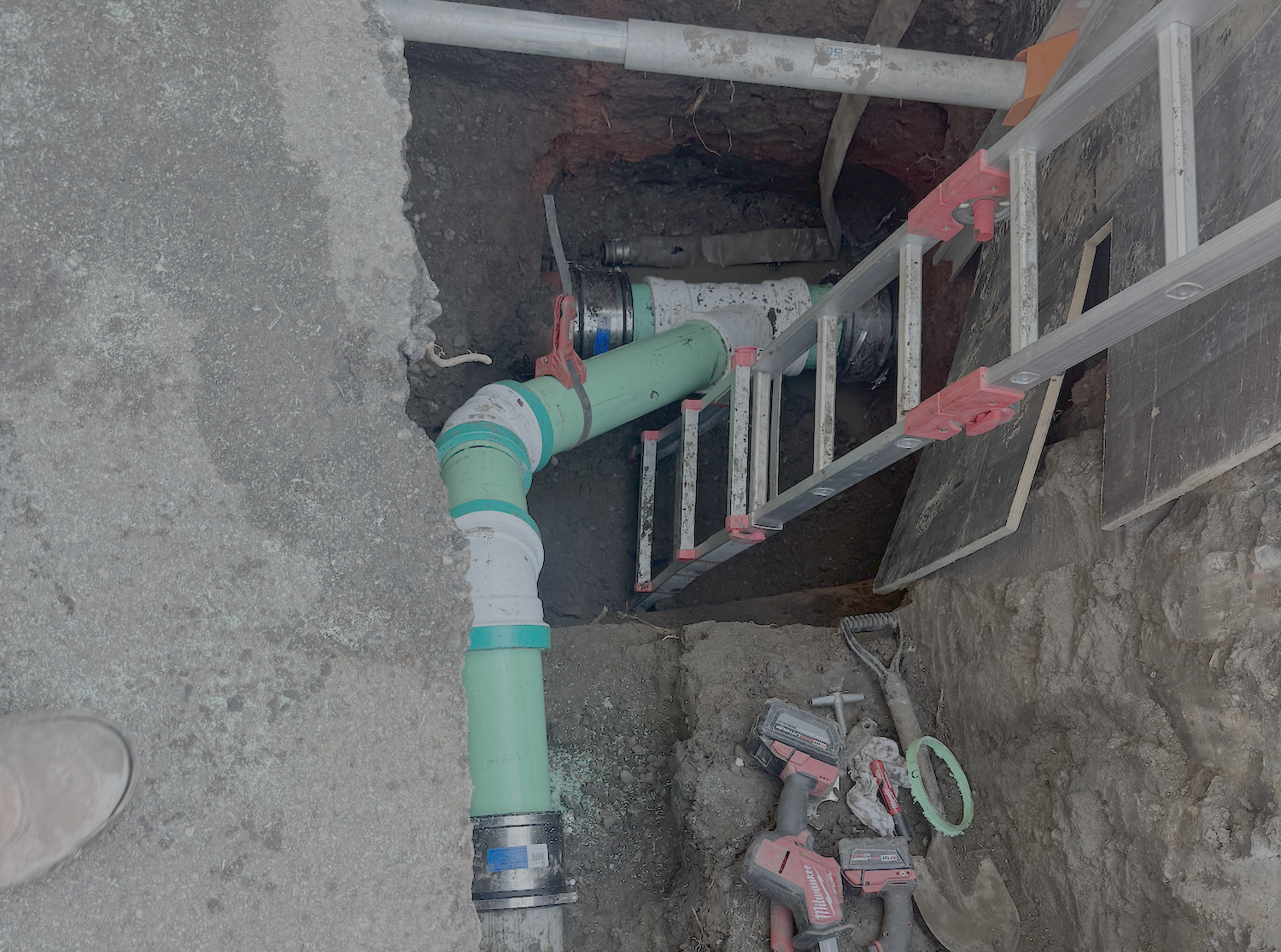
- New pipe installation: We install new Schedule 40 PVC pipe at the correct grade (typically 1/4 inch per foot minimum) with proper bedding material and connections.
- Inspection: The city or county inspector verifies the installation before we backfill. This typically includes checking grade, pipe material, connections, and bedding.
- Backfill and restoration: We backfill in lifts with compaction testing, then restore the surface, whether that is landscaping, a concrete sidewalk panel, or an asphalt street patch.
How Long Does It Take?
Most residential sewer lateral replacements take 1 to 3 days from excavation to final backfill. However, the total timeline from start to finish is typically longer when you factor in:
- Permit processing: 3 to 10 business days depending on the jurisdiction
- USA markings: 2 business days minimum
- Inspector scheduling: 1 to 3 business days for inspection appointments
- Street restoration: May require a separate paving crew and additional inspection
We have completed straightforward residential laterals in a single day. More complex projects involving deep excavations, street cuts, or multi-agency coordination can take a full week or more. We handle the entire scheduling process so you do not have to chase permits and inspectors.
When to Replace vs. Repair
Not every sewer problem requires a full replacement. Here is how we help our clients decide:
Consider full replacement when:
- The pipe is made of Orangeburg, clay, or deteriorated cast iron: these materials have a limited lifespan and spot repairs tend to be temporary.
- The camera inspection shows multiple failure points along the length of the lateral.
- The pipe has lost grade (bellied) due to ground settling, causing chronic backups.
- Root intrusion is extensive and recurring despite repeated hydro jetting or clearing.
- The property is being sold and the lateral does not meet current compliance requirements (especially in Oakland, Berkeley, and other cities with point-of-sale mandates).
Spot repair may be sufficient when:
- There is a single break or offset joint in an otherwise sound pipe.
- The pipe material is in good condition (newer PVC or ABS) with an isolated issue.
- The damage is close to the building and easily accessible without major excavation.
A camera inspection is the only reliable way to make this determination. We provide video documentation of the lateral's condition so you can see exactly what we see before making a decision.
Sewer Lateral Replacement Cost: Frequently Asked Questions
Open-trench sewer lateral replacement runs $50 to $250 per linear foot nationally. In the Bay Area, complete projects usually work out to $150 to $300 per foot once permits, shoring, inspections, and surface restoration are included. Runs under driveways or streets land at the top of that range.
The property owner pays. In nearly every Bay Area jurisdiction the private sewer lateral belongs to the property, in most cases all the way to the connection at the public main. Some cities soften the blow with cost-sharing programs. The City of San Mateo, for example, reimburses 50% of the lowest bid, up to $2,500, for a full lateral replacement while funding lasts, so check with your local sewer authority before you start.
Usually not. Standard homeowners policies exclude failures caused by wear, age, roots, and ground settling, which covers most lateral failures. Some insurers sell a service line endorsement for roughly $30 to $100 per year that can cover underground pipe repairs. Check your policy before assuming either way.
It depends on your city. Burlingame, Millbrae, and the City of San Mateo all require a sewer lateral test or inspection before a sale closes, and East Bay cities in the EBMUD service area require a compliance certificate when a property sells. If the lateral fails the test, repair or replacement is typically negotiated in escrow. Cities without an ordinance leave it to the buyer inspection process.
A new PVC lateral installed at proper grade with compacted bedding has a design life of 50 to 100 years. That is the real payoff of replacement: the clay, Orangeburg, and cast iron pipes failing across the Bay Area today were installed 60 to 100 years ago, so a correct replacement is a once-per-generation project.
Not on the pipe work itself, but often on the total project. Pipe bursting runs $60 to $200 per foot versus $50 to $125 for open trench, yet it avoids most surface restoration. If your lateral runs under a lawn, open trench is usually cheaper. If it runs under a driveway, mature landscaping, or the street, trenchless usually wins once restoration is counted.
Related Bay Area Cost Guides
Lateral work often surfaces other plumbing that is due at the same time. If the excavation is already open, it is worth pricing gas line installation in the same trench, and if the main shut-off is original to the house, our ball valve and shut-off valve replacement guide covers what that costs. For a tank that is near the end of its life, see the water heater replacement guide.
Get Your Sewer Lateral Replaced Right with Next Level Plumbing
The cost of a sewer lateral replacement comes down to three things you now know how to read: the run itself, what sits above it, and what your city requires. Here is how to move forward:
- Get a camera inspection so you know whether you need a spot repair or a full replacement, and exactly how long and deep the run is.
- Check your city's lateral ordinance and cost-sharing programs before scheduling, especially if a sale is anywhere on the horizon.
- Get itemized bids that separate pipe work, permits, shoring, and restoration, so you can compare quotes line by line instead of guessing.
We handle all three across the Peninsula and greater Bay Area, from the first camera pass to the final street patch, with permits and inspections managed for you. Request a free estimate or call us at (650) 532-4866, and learn more about our full sewer line services. We serve San Mateo, San Francisco, Oakland, Hayward, Burlingame, Hillsborough, Palo Alto, and surrounding communities. The result is the outcome that matters: a lateral that passes any test your city throws at it and does not back up again for the next 50 years.