Main Water Line Replacement Cost in the Bay Area: 2026 Prices, Permits, and Who Pays
Replacing a main water line costs $647 to $2,833 on average nationally, or about $50 to $150 per linear foot, according to HomeAdvisor's June 2026 cost data. Fixr puts the typical job higher, at $1,500 to $12,000, with most people paying $100 to $200 a foot. On the Peninsula, expect to land toward the top of those ranges. HomeAdvisor itself notes that a deep line or a high-cost urban area can push the price to $250 per foot.
This guide covers the pipe you own: the water service line that runs from the meter to your house or building. That is the part that starts leaking under the lawn, and the part your water provider will not fix for you. It covers both a single leak repair and a full meter-to-house replacement, on homes and on small commercial properties.
Maybe the water bill jumped and there is a green, soggy strip in the front yard that never dries out. Maybe the house still has its original galvanized pipe and the pressure at the shower has been fading for years. Or your water provider has started asking customers what their side of the service line is made of, and you want to know what is yours to pay for.
Every price here comes from a named national cost survey, the EPA, or a Bay Area city's published fee schedule, so you can check the numbers yourself. By the end you will know what a water line replacement costs per foot and in total, where your responsibility starts, when a repair is enough, and which local fees to budget for.
We have grouped it into four parts: the price ranges, who owns which part of the line, repair versus replacement and trenched versus trenchless, and the Bay Area fees and lead rules that change the total. Start with the numbers.
How Much Does It Cost to Replace a Main Water Line?
A main water line replacement averages $1,703 nationally, with most jobs between $647 and $2,833, based on HomeAdvisor's 2026 survey of customer-reported costs. Per foot, HomeAdvisor lists dig-and-replace work at $50 to $250 and trenchless replacement at $75 to $150, while Fixr puts a typical installation at $75 to $225 a foot.
| Item | National range | Source |
|---|---|---|
| Main water line replacement, typical total | $647 to $2,833 (average $1,703) | HomeAdvisor (June 2026) |
| Main water line installation, typical total | $1,500 to $12,000 (average $3,750) | Fixr (August 2025) |
| Dig-and-replace, per foot | $50 to $250 | HomeAdvisor (June 2026) |
| Trenchless replacement, per foot | $75 to $150 | HomeAdvisor (June 2026), Fixr (August 2025) |
| Leak repair instead of replacement | $350 to $1,700 | HomeAdvisor (June 2026) |
| Landscaping restoration after a repair | $1,200 to $6,300 | HomeAdvisor (June 2026) |
| Plumbing permit | $100 to $500 | HomeAdvisor (June 2026) |
The two surveys disagree because they measure different things. HomeAdvisor's range reflects what its customers reported paying, and plenty of those jobs are short runs. Fixr prices by the foot, and its own length table puts a 50 foot line at $3,750 to $11,250 installed and a 100 foot line at $7,500 to $22,500. Length is the number that moves your quote the most.
Labor is the other big variable, and it costs more here. Bureau of Labor Statistics wage data for May 2025 puts the mean plumber wage at $44.41 an hour in the San Francisco metro area and $54.94 in the San Jose metro area, against $34.70 nationally. National averages undershoot Peninsula quotes for that reason alone.
Picture a Redwood City house set back 70 feet from the meter box, with the line running under a concrete driveway. At Fixr's $75 to $225 a foot, those 70 feet come to $5,250 to $15,750 before anyone prices the driveway. That is why a neighbor's story about a $2,000 replacement may tell you very little about yours.
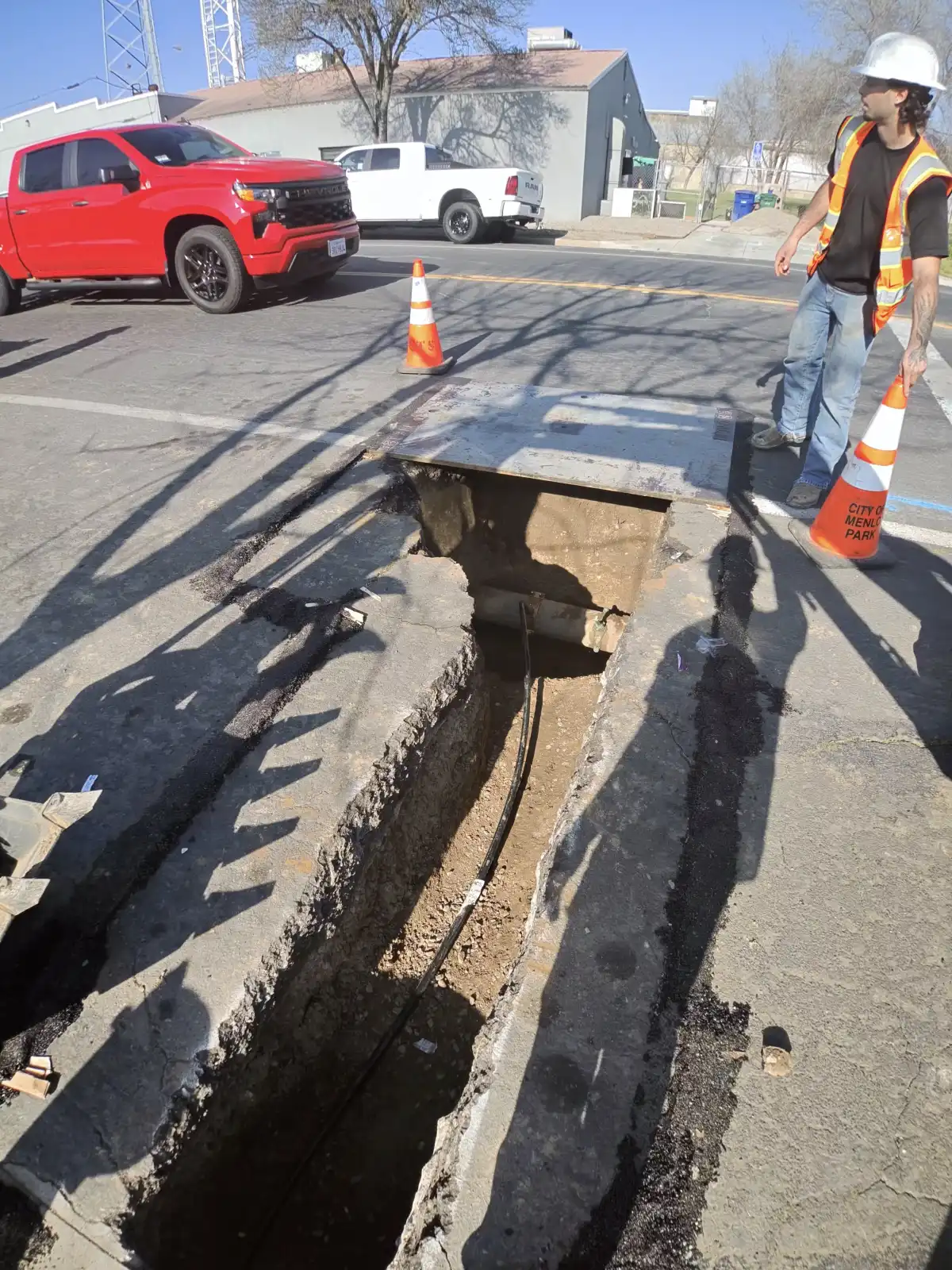
Where Your Water Line Starts and the Utility's Ends
On the Peninsula, the water utility owns the pipe from the main in the street up to the meter, and you own everything from the meter to the building. That split is written into the utilities' own rules, so a leak on your side of the meter is your bill, and a leak on theirs is not.
- Cal Water says state regulators only authorize it to take responsibility for the system on the utility side of the meter, and that customers maintain the plumbing on their side.
- Mid-Peninsula Water District is responsible for pipes on the street side of the meter, and the property owner is generally responsible for everything on the customer side.
- Palo Alto Utilities maintains the pipe from the main up to and including the meter. The customer's responsibility begins after it.
- The SFPUC defines the customer-owned line as the pipe from the meter box to the plumbing inside the building, and says the property owner is responsible for replacing it.
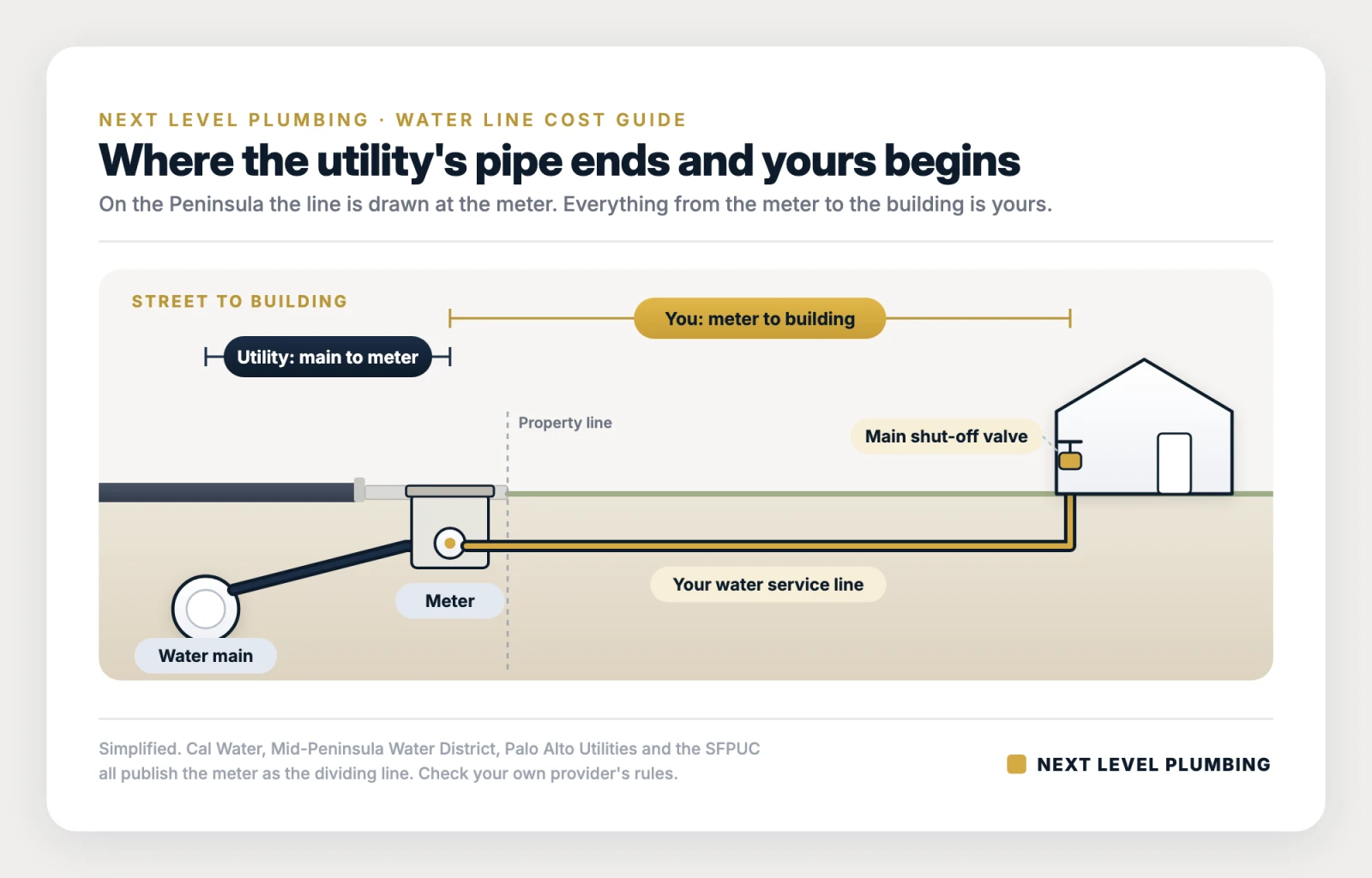
State law draws the same line. The State Water Resources Control Board's lead service line guidance defines the utility's "user service line" as the pipe from the water main to the meter, not the line from the meter to the home, which it calls the water lateral and treats as the homeowner's responsibility. The valve at the house end is yours too, and our main water shut-off valve replacement guide covers what that part costs on its own.
Say water is bubbling up through the sidewalk seam next to your meter box in Belmont. Before you call a plumber, call the water district. If the leak is on its side of the meter, it is their repair at no cost to you. If it is between the meter and your house, it is yours, and that is the pipe this guide is pricing.
Repair the Leak or Replace the Whole Line?
Repair a single leak on a line that is otherwise sound, and replace the line when it is galvanized, has leaked more than once, or is losing pressure along its length. HomeAdvisor puts a main line repair at $350 to $1,700 and notes that when problems keep coming back, replacing the whole line can save money over time.
If the line has actually burst and water is running, close the main shut-off and call for emergency water line repair first. The repair-or-replace decision can wait until the water is stopped.
- If the line is copper or plastic and one leak has an obvious cause, such as a nicked pipe from a fence post or a failed fitting, repair it. A sound line with one bad spot does not need to come out.
- If the line is galvanized steel, plan on replacement. Galvanized corrodes from the inside, so a leak in one spot usually means the rest of the pipe is thinning too, and the narrowing inside is what steals your water pressure.
- If the line is lead or you do not know what it is made of, replace it, and ask your water provider what it is doing about its own side of the meter.
- If this is the second leak in a few years, price a replacement next to the repair before you approve either one.
Picture a 1940s duplex in San Mateo with its original galvanized service and a leak under the side yard. A $350 to $1,700 repair fixes today's hole. It does nothing for the rest of the pipe, which has been corroding at the same rate for 80 years and will likely leak again somewhere else.
Trenched or Trenchless: Let the Surface Decide
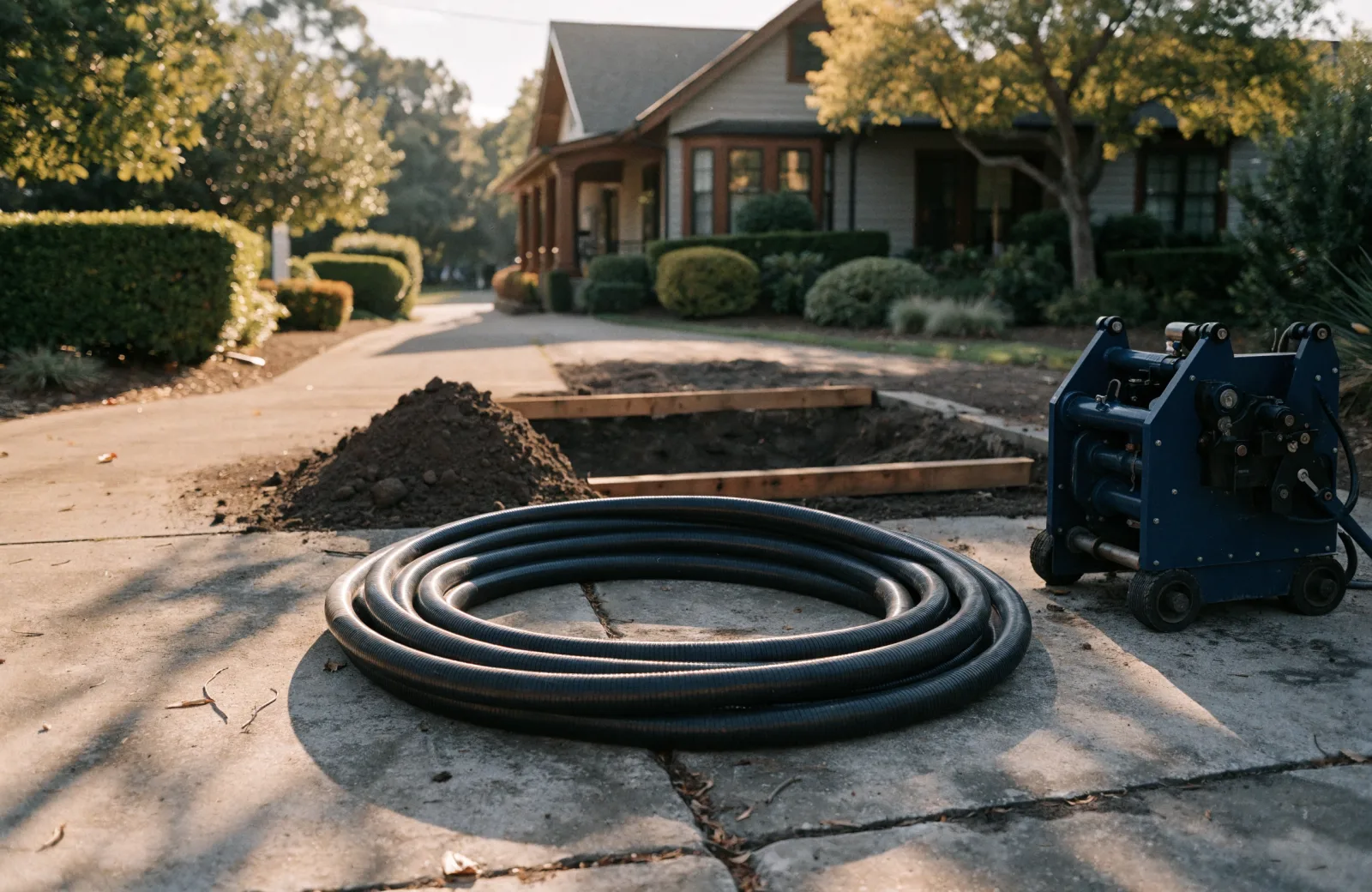
Trenchless replacement costs about the same per foot as digging, so the choice usually comes down to what sits on top of the line. Under lawn, a trench is simple and cheap to restore. Under a driveway, a walkway, or mature landscaping, pulling a new line through from two small pits can save most of the restoration bill.
- If the run crosses open lawn or planting beds, dig it. Trenching is straightforward, the new line can be bedded properly, and restoration is mostly soil and sod.
- If the run crosses concrete, pavers, or the roots of trees you want to keep, ask for a trenchless price. HomeAdvisor's June 2026 repair data puts landscaping restoration alone at $1,200 to $6,300, and hardscape costs more than planting to put back.
- If the line has several bends, tees, or connections along the way, expect at least some digging. Each fitting needs its own access point, and past a few of them the pits add up to a trench anyway.
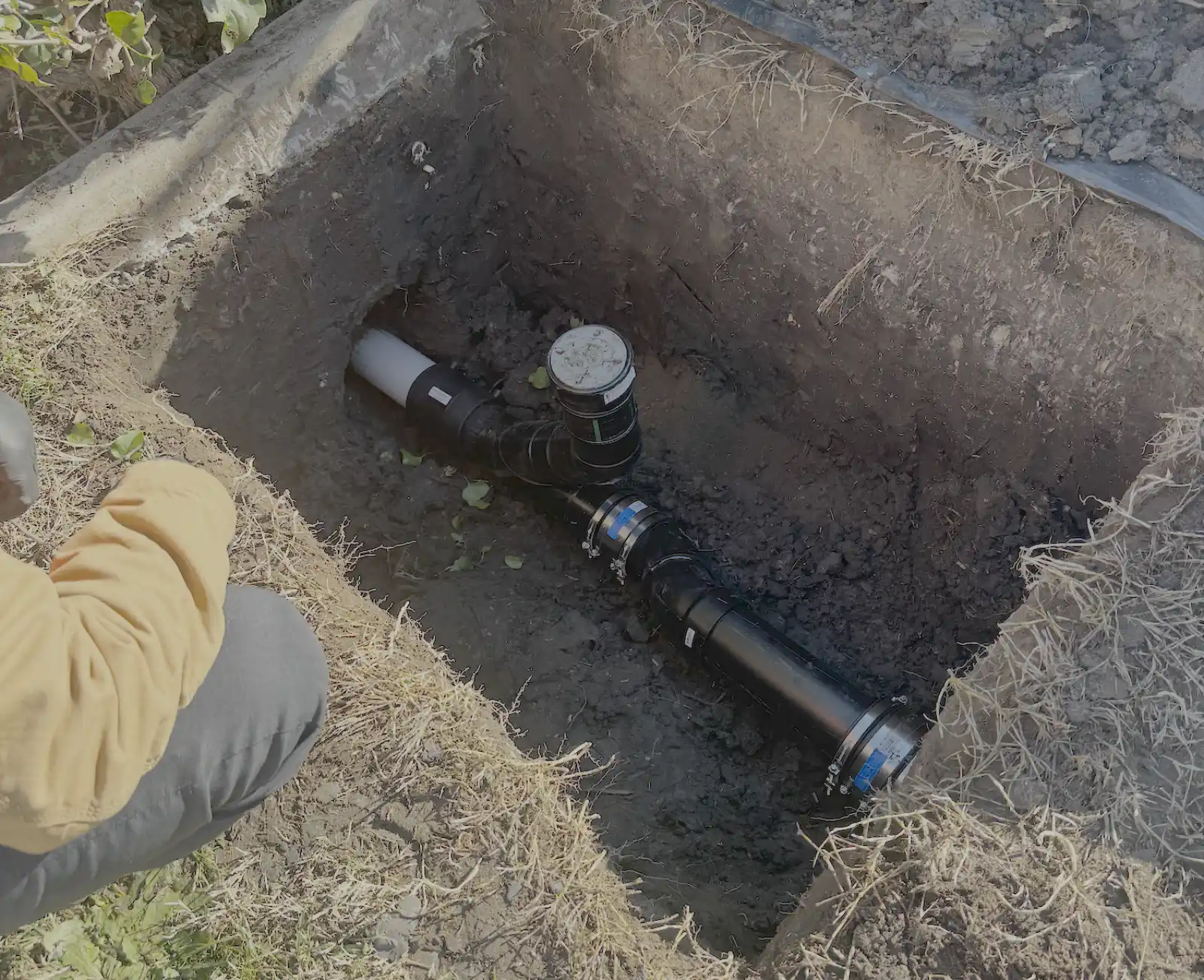
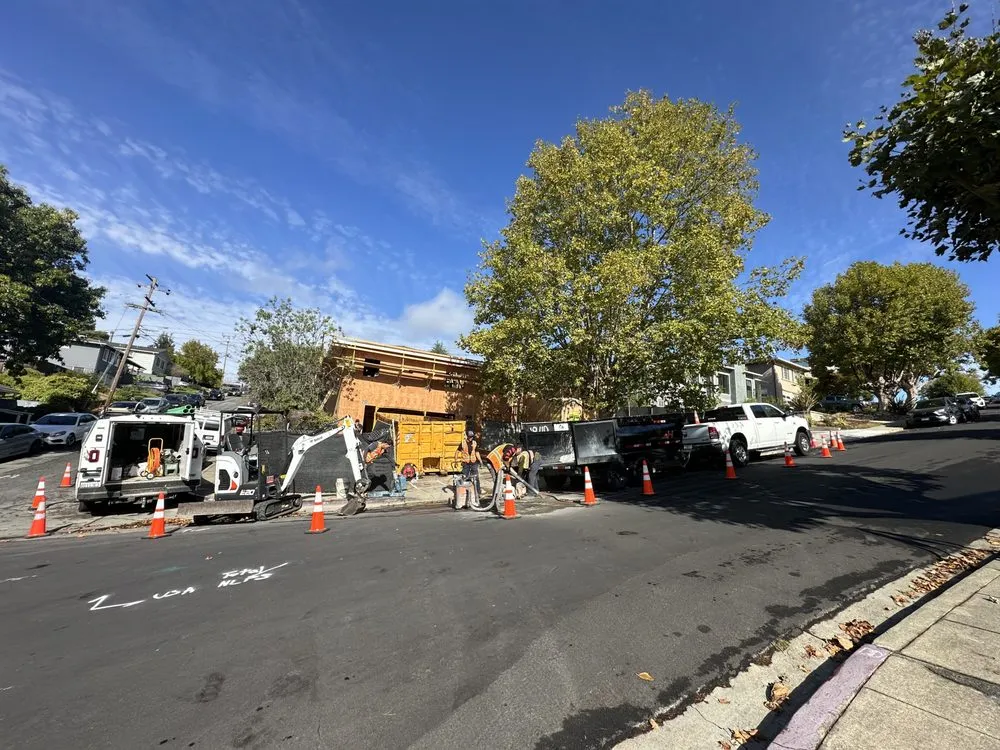
Either way, most of what you are buying is access. A water line replacement is largely an excavation job with a pipe at the end of it, which is why our excavation and restoration crew handles the opening, shoring, and surface repair on these jobs rather than leaving it to a separate contractor.
The Bay Area Permit and Street Fees to Expect
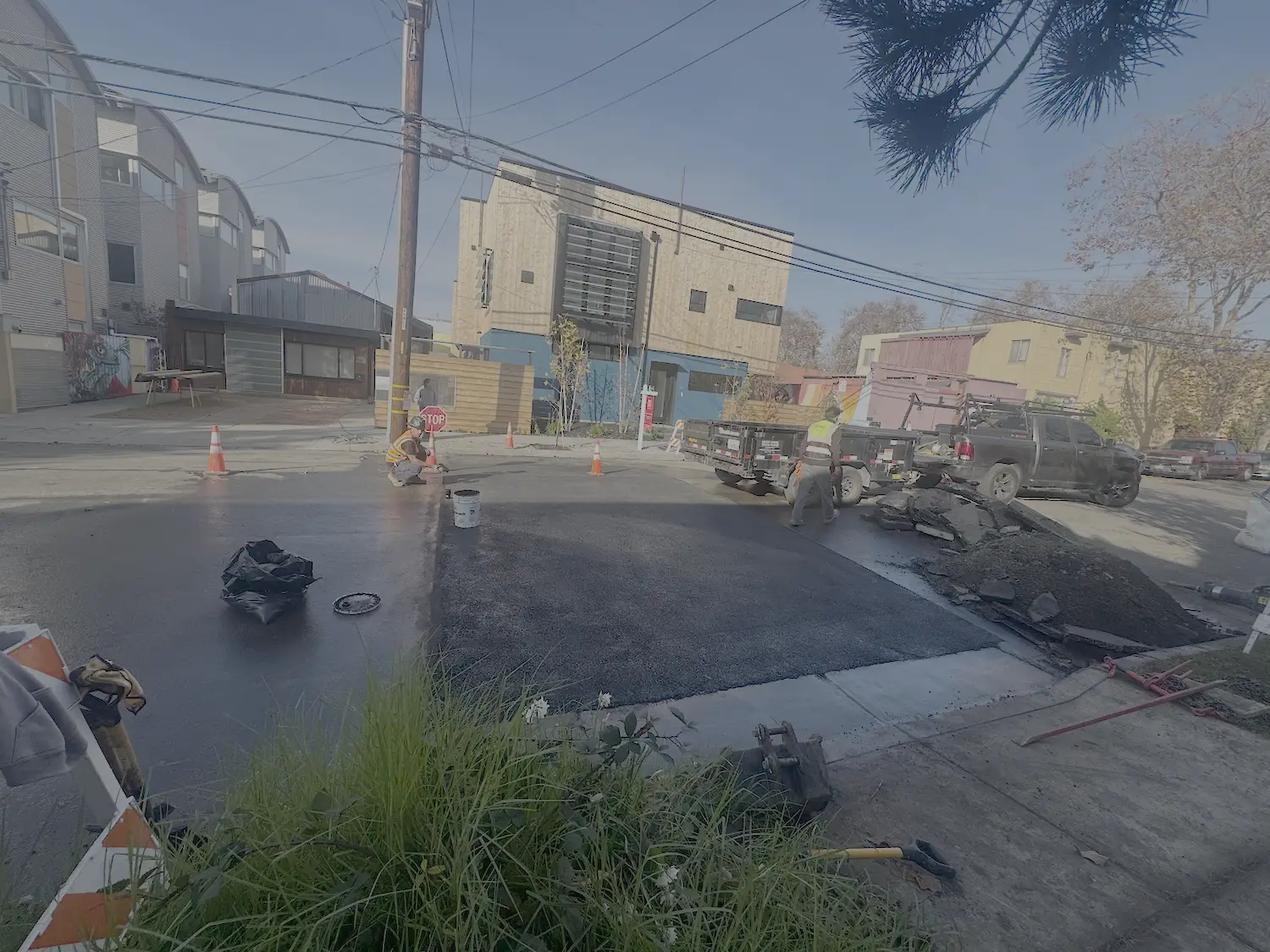
A water service replacement needs a plumbing permit, and any work in the sidewalk or street needs an encroachment permit on top of it. Menlo Park's master fee schedule, effective July 1, 2026, shows what that looks like in practice: about $361 in plumbing permit fees for water piping, and another $1,064 if the job needs a street opening.
| Menlo Park fee (effective July 1, 2026) | Amount |
|---|---|
| Plumbing permit issuance | $66.00 |
| Water piping, installation, alteration, or repair: plan check | $70.00 |
| Water piping, installation, alteration, or repair: inspection | $224.63 |
| Minor encroachment permit (covers one lateral street opening, up to 4 inspections) | $1,064.00 |
Fees differ by city, so look up yours before you compare quotes, and check whether each quote includes them. HomeAdvisor's national range for the permit alone runs $100 to $500. Work in the street also brings traffic control and city-standard paving, which is why jobs that cross the property line cost more than jobs that stay inside it.
One branch worth knowing about: if you are upsizing the service for an ADU, an addition, or fire sprinklers, you may need a bigger meter and a new utility connection, and the utility charges for that separately. The SFPUC's fiscal year 2026-27 rate schedule, for example, lists $13,827 to install a new 1 inch standard service at a customer's request in San Francisco. If you are only replacing the line on your side of an existing meter, that charge does not apply.
Lead and Galvanized Lines: What California Requires, and What It Does Not
California requires water systems to inventory the lead service lines they own and set a timeline to replace them, but that rule covers the utility's pipe from the main to the meter, not yours. The State Water Board expects those utility-side replacements to take no longer than 10 years, and it encourages utilities to tell customers when the customer's side is lead or an unknown material. Replacing the customer side stays the owner's job.
For a sense of scale, the EPA's economic analysis for its 2024 Lead and Copper Rule Improvements put the mean cost of a full lead service line replacement at $6,930 per line across 23 projects reported to its national infrastructure survey, in 2020 dollars, with the middle half of projects between $6,507 and $8,519. Those figures cover both the utility and customer sides, so treat them as a reference point rather than a quote for your half.
Some utilities are already working on their side. The SFPUC says it is replacing all of the galvanized service lines it owns. If yours is doing the same, ask whether they will coordinate with you, because replacing your half while the street side is open can save you a second dig.
How to Compare Two Water Line Quotes
Two water line quotes are only comparable when they describe the same job, so line them up on scope before you look at price. A low quote that stops at the property line, skips the permit, or leaves the driveway for you to fix ends up costing more by the time the job is finished.
- Check where each quote starts and stops. Both should run from the meter to the house shut-off valve, and say whether the valve is being replaced.
- Check the pipe. Each quote should name the material and size, whether copper, PEX, or polyethylene, and 3/4 inch or 1 inch.
- Check the method and the restoration. Trenched or trenchless, and exactly what gets put back: lawn, concrete, pavers, or asphalt.
- Check permits and the shutdown. Who pulls the permit, who books the inspection, and who coordinates turning the water off with the utility.
Main Water Line Replacement: Frequently Asked Questions
HomeAdvisor's June 2026 data puts the national average at $1,703, with most jobs between $647 and $2,833, or $50 to $150 per foot. Fixr's range is higher, $1,500 to $12,000 with most people paying $100 to $200 a foot. Bay Area jobs tend to land toward the top because of labor costs, longer runs, and hardscape restoration.
Your water provider, in most of the Peninsula. Cal Water, Mid-Peninsula Water District, Palo Alto Utilities, and the SFPUC all take responsibility for the pipe on the street side of the meter, and the property owner is responsible from the meter to the building. If the leak is at or before the meter box, call the utility before you call a plumber.
The sudden water damage a leak causes inside the house is often covered, but replacing a buried line that failed from age or corrosion usually is not under a standard policy. Many insurers sell an optional service line endorsement for buried water and sewer lines. Read your policy or ask your agent before you assume either way.
Yes. Replacing a water service line needs a plumbing permit from your city, and if any of the work reaches the sidewalk or street, an encroachment permit as well. Menlo Park's current fee schedule, for example, charges $66 to issue a permit plus $70 plan check and $224.63 inspection for water piping.
Usually, yes. The water is already off and the pipe at the house end is already exposed, so replacing an old gate valve with a full-port ball valve during a water line replacement costs far less than coming back for it later.
Not per foot. HomeAdvisor puts trenchless replacement at $75 to $150 per foot against $50 to $250 for dig-and-replace. Trenchless usually wins on total cost only when the line runs under a driveway, walkway, or mature landscaping that would be expensive to tear out and rebuild.
Related Bay Area Cost Guides
The other buried line you own runs the opposite direction. If you are dealing with backups rather than leaks, start with our guides to tree roots in a sewer line and sewer lateral replacement costs.
Replacing a Main Water Line? Start With Next Level Plumbing
A water line quote is only as good as its scope, and the scope is mostly about access: how long the run is, what sits on top of it, and where it meets the street. We walk the line from the meter to the building, tell you whether a repair will hold or the pipe needs to go, and handle the permit, the excavation, and the restoration in one job. See how our water line replacement and repair work is done, or call (650) 532-4866 to get a line walked and priced.