Sewer Backing Up When It Rains? How to Tell If It's Your Lateral or the City's Main

If your sewer backs up only when it rains, the cause is usually one of two things: rainwater getting into a cracked private lateral, or a public main that is too full to take your flow. A city crew can check the main, and a camera run on your lateral once it drains tells you if your side is part of the problem. Which one it is decides who you call and who pays.
This guide is for Peninsula homeowners who just watched the downstairs shower or toilet fill up during a storm, and for anyone who has seen it happen more than one winter in a row. Every city rule below comes from that city's own website or municipal code, linked so you can check it.
Why does a sewer back up when it rains?
Sewer pipes are built to carry wastewater, not rain, so storm water that sneaks in fills them up. When the line can't keep up, the water goes to the lowest opening it can find, which is often a drain inside your house.
Rain gets in two ways. The first is through broken pipe. The City of San Mateo says stormwater and groundwater seep into private sewer laterals, and that too much of it can cause sewage overflows on city streets. Hillsborough says the same thing about laterals cracked or damaged by tree roots: groundwater gets in during wet weather, overloads the system, and can push sewage back into homes.
The second way is through connections that should never have been made. Burlingame's code lists sump pumps, downspouts and yard drains that discharge into the sewer as a public nuisance the owner has to fix. Older houses sometimes have them.
Roots make both worse. They grow into the same open joints rain uses, and they catch whatever comes down the line. Our guide to tree roots in a sewer line covers what clearing and repair cost.
How can I tell if it's my lateral or the city main?
Look at the pattern and at your cleanout. A backup that only happens in heavy rain and hits neighbors too points at the main, while one that also happens on dry days points at your lateral.
- Only in heavy rain, and the neighbors have trouble too. That points at a full public main. Call the city first.
- On dry days as well, or right after laundry or showers. That points at a blockage in your own lateral. Rain just makes it show up sooner.
- Your property line cleanout is full of standing water. The blockage is somewhere between that cleanout and the main, in the lower lateral or the main itself.
- The cleanout is empty while the house backs up. The blockage is between the house and the cleanout, which is your side in every city in the table below.
Don't unscrew a cleanout cap on a line that might be full. Sewage can come out under pressure, so let the plumber open it.
A camera settles the question. Once the line drains, a camera run shows cracks, open joints, roots and sags, which are the places rain gets in. Millbrae and San Carlos both use camera video for their own lateral inspections.
Where does your city's part of the line start?
On most of the Peninsula the property owner is responsible for the whole lateral, from the house to the main. A few cities take over the street section, but only when there is an approved cleanout in the right spot.
| City and source | Where the owner's part ends |
|---|---|
| City of San Mateo Municipal Code 7.38.432 | Owner is responsible from the building to the main, including the wye connection at the main. The city does not maintain private laterals. |
| Burlingame Burlingame Sewer System page | City maintains the piping from the cleanout at the City right of way to the main. Buildings from before the mid 1960s were not required to have a cleanout there, and city crews can't clear backups on private property. |
| Millbrae Municipal Code 8.20.430 (2011 update) | Owner maintains the lateral and the wye. The city takes the section from the cleanout wye to the main only when the cleanout is in the sidewalk or within 2.5 feet of the pavement or main. |
| San Carlos Municipal Code 13.05.040, city sewer overview | Owner is responsible for the private lateral. With an approved property line cleanout, the city takes over the lower section in the public right of way. |
| Hillsborough Sewer Lateral Programs | Lateral repair is the owner's job. The Town waives permit fees for repairs to the upper lateral. |
Rules checked on each city's site on 6 November 2026. If your city is not listed, call its public works department and ask where its maintenance stops.
What should I do while it's backing up?
Stop putting water down the drains, keep people and pets away from the overflow, and call the right number. If the main is the problem, the city needs to know; if it's your lateral, you need a plumber.
- Stop using water. No laundry, dishwasher, showers or flushing until it drains. Every gallon you add has nowhere to go.
- Call the city if the main might be involved. In the City of San Mateo, call Public Works at (650) 522-7300 on weekdays from 8 to 5, or Police Dispatch at (650) 522-7700 after hours (city directory). Hillsborough lists Public Works at (650) 375-7444 and an after-hours line at (650) 375-7470 (Town sewer page). In other cities, use the public works number on the city website.
- Photograph the water, the fixtures and the damage before you clean up. Burlingame's backwater ordinance page tells owners to check that their insurance covers sewer backups.
- Call a plumber if the city says the main is clear, or if the backup happens on dry days too. Our emergency plumbing page covers what happens when you call.
If you manage an apartment or commercial building
In the City of San Mateo, a lateral backup that causes an overflow at a commercial or multifamily property is one of the triggers for a required lateral inspection under the private sewer lateral ordinance. Budget time for that inspection on top of the cleanup.
What stops it from happening every storm?
A backwater valve keeps sewage from flowing back into the house, and fixing the cracks and illegal connections keeps rain out of the line. If your house backs up every winter, ask about both.
- A backwater valve. Burlingame's backwater ordinance explains why: when fixtures sit below the next upstream manhole, a backup in the main finds the lower point in your house instead of spilling out of the manhole. The city can require a valve or relief device, and fixture levels get reported at certain property transfers. San Carlos requires a backwater valve on the upper lateral when any floor sits below the sewer main.
- A relief valve on the cleanout. San Carlos requires one. It lets a backup spill out of the cleanout in the yard rather than into the house.
- Disconnect downspouts and yard drains from the sewer. Burlingame's sewer system page says rain runoff should be piped to the City right of way and never connected to the sewer main.
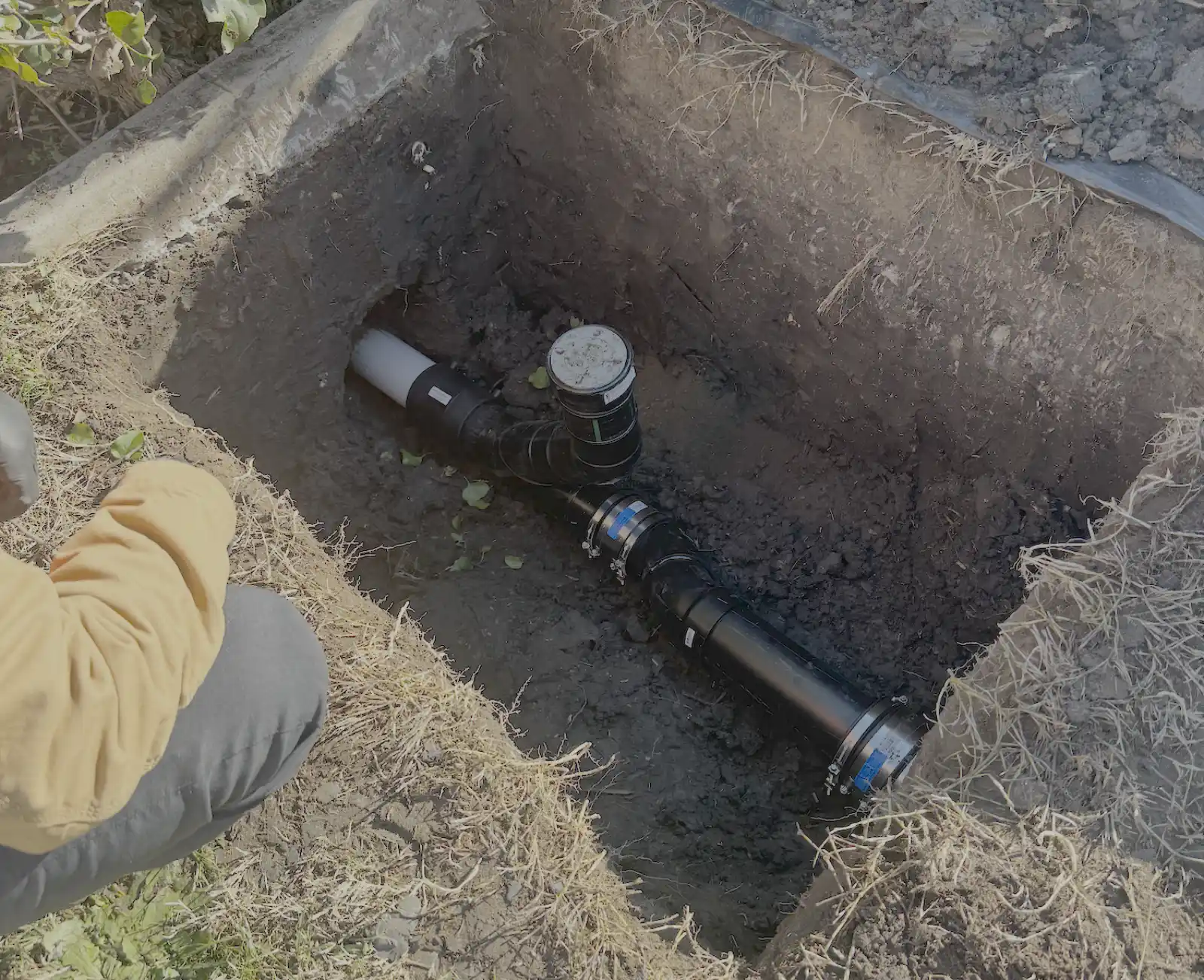
- Fix the lateral where rain gets in. Clearing roots buys time. Sealing or replacing cracked pipe stops the inflow.
When does a rain backup mean the lateral needs work?
If the camera shows cracks, open joints, roots or sags, the lateral is letting rain in and it will keep backing up. That is a repair or replacement job, not a drain cleaning job.
Hillsborough's advice is to consider repair or replacement if you are paying for regular root clearing. Millbrae has a rebate of 20% of the cost, up to $2,000, for laterals at risk of overflowing and broken laterals, first come, first served. In San Carlos, a city inspection after a backup can lead to a notice to repair the upper lateral and fix every source of inflow.
For what the work costs, see our sewer lateral replacement cost guide. If roots are the main problem and the pipe is still sound, hydro jetting clears them before a camera run. When the pipe is broken, our sewer line replacement team handles the camera work, permits, digging and city inspection as one job.
Common questions about sewer backups in the rain
Gurgling during a storm usually means the line is struggling to carry water away, so air gets pushed back up through the lowest fixtures. It can come from rainwater getting into a cracked lateral or from a full public main. If it only happens in heavy rain, keep water use low and get the lateral checked once things dry out.
That depends on where the blockage was and on your city's rules. Report it to the city right away so a crew can check the main, and photograph everything for your insurer. Some cities limit what they owe: Millbrae's code says that if an owner never installed a required backflow device, the city is not responsible for later overflow damage, and San Carlos's code says the same when a required lateral repair is not done on time, even if the backup started in the main.
You may be required to have one. San Carlos requires a backwater valve on the upper lateral when a floor of the building sits below the sewer main, and Burlingame's backwater ordinance lets the city require one where fixtures sit below the next upstream manhole. Hillsborough's code also requires backflow devices on certain homes. If your lowest drain is close to street level, ask about one.
No. Burlingame's code calls downspouts, sump pumps and yard drains that discharge into the sewer a public nuisance the owner has to correct, and San Carlos makes owners fix all sources of inflow after a backup. Rainwater that goes into the sewer adds to the same storm overload that backs lines up.
A camera shows cracks, open joints, roots, sags and offsets, which are the places rainwater and groundwater get in. It cannot show the water level in the city main during a storm. Run it after the line has drained so the picture is clear, and keep the video in case your city asks for it.
Backing up again this winter? Call Next Level Plumbing
We work on sewer laterals across the Peninsula. We run the camera, show you on the screen where the water is getting in, and tell you which side of the cleanout the problem is on. Call (650) 532-4866 or request an estimate.