Sewer Backing Up When It Rains? How to Tell If It's Your Lateral or the City Main
If sewage is coming up a floor drain, a downstairs shower or a low toilet during a storm, rainwater has usually got into the sewer pipes and filled them past what they can carry. That can happen in the public main, in your own sewer lateral, or in both. Stop running water and call your city or sanitary district to check the main. If they tell you the main is flowing, the lateral (the pipe from your house out to the main) is the next suspect, and in Hayward, Castro Valley and most of Alameda County that pipe is yours.
That's the part we work on. We're based in Hayward and work across Alameda County. If the district says the main is clear and you're still backing up, call us at (650) 532-4866 and we'll camera your lateral.
Why rain makes a sewer back up
Your house drains into a sanitary sewer built for wastewater. Rain is supposed to go to the storm drains. In a long storm it gets into the sanitary pipes anyway, two ways:
- Infiltration. Groundwater seeps in through cracked pipe, broken joints and holes that roots have opened. An old lateral with roots in its joints is a typical way in.
- Inflow. Storm water piped straight in from a downspout, sump pump or yard drain that's tied into the sewer.
The sewer agencies here say the same thing. Oro Loma Sanitary District says damaged laterals "can allow rainwater and groundwater to enter the sewer system, placing additional strain on the District's wastewater infrastructure during storm events" (Oro Loma Sanitary District). Castro Valley Sanitary District's code bars roof leaders and surface drains from any building sewer, and bars rain water, storm water or seepage from getting in "by any device or method whatsoever" (CVSan Code 3806). Livermore asks residents not to connect floor drains, roof gutters, sump pumps and other drainage systems to the wastewater system (City of Livermore).
Once the pipe is full, sewage comes out at the lowest opening it can reach. In most houses that's a garage floor drain, a ground floor shower, or a toilet that sits below the street.
Is it your lateral or the city main?
Only a camera tells you for sure, but what you're seeing usually points one way:
| What you see | Points toward |
|---|---|
| Neighbors are backing up too, or a manhole in the street is overflowing | The public main |
| It only happens in big storms and clears when the rain stops, with no slow drains in dry weather | Either one: an overloaded main, or a lateral taking in groundwater |
| Your house only, and drains are slow or gurgle even in dry weather | Your lateral (roots, a sag, a break or a partial blockage) |
| One sink or tub is slow and nothing else is affected | A clog in that fixture's drain, not the sewer line |
| It happens every winter, in the same spot | Your lateral. Get it on camera before the next storm. |
A single slow sink is a clog in that fixture's drain. We can clear it, but it won't tell you anything about the sewer. A backup at the lowest drain in the house is different: that's the lateral or the main, and it needs a camera.
What to do the night it happens
- Stop using water. No flushing, showers, laundry or dishwasher. Whatever you run down the drain right now ends up on your floor.
- Call your city or sanitary district first. Report the backup, or a street manhole overflowing. If the blockage is in the public main, clearing it is their job. The number for each city and district is in the table below. Oro Loma and Union Sanitary District answer around the clock, and the cities list an after-hours line.
- Keep people and pets out of it. The CDC says to wear rubber boots, rubber gloves and goggles if sewage is involved, and to keep children and pets away until cleanup is done (CDC).
- Photograph the damage and keep your receipts. For a sewer backup claim, Triple-I suggests photos of the affected areas, a list of what was damaged, every receipt for cleanup and repairs, and a call to your insurance professional as soon as possible (Triple-I).
- Dry out fast. The CDC advises drying a home within 24 to 48 hours if possible after storm or flood water, and throwing out drywall and insulation contaminated with sewage.
- If the district says the main is clear, the problem is on your side. That's when you call a plumber about the lateral.
Who owns which part of the line in Alameda County
The lateral runs from your house, usually past a cleanout near the house or at the property line, to the public main under the street. In most of Alameda County the whole pipe is yours. What changes from place to place is who runs the main and who you call. In Hayward, Castro Valley and San Leandro two agencies split the area, so check your sewer bill or Oro Loma's service map if you're not sure. These are the rules and phone numbers as we read them on each agency's website on 20 Nov 2026:
| Where | Who owns the lateral | Who to call about the main |
|---|---|---|
| Hayward (City sewer) | The owner, on private property and under the sidewalk and street, up to and including where it connects to the public sewer. | (510) 881-7967, weekdays 8 am to 2 pm. After hours and weekends, Hayward Police Dispatch at (510) 293-7000. |
| Castro Valley (Castro Valley Sanitary District) | The owner, from the house to CVSan's public main. | (510) 506-5821 for an overflow or after hours. Office: (510) 537-0757. |
| Oro Loma Sanitary District: San Lorenzo, Ashland, Cherryland, Fairview and parts of Hayward, San Leandro and Castro Valley | The owner, all the way to the sewer main, which is often in the street. | (510) 276-4700, answered around the clock. |
| San Leandro (City sewer, northern two-thirds of the city) | The owner, for the entire distance to the sewer main. | (510) 577-3434 (Treatment Plant). After 3:30 pm and on weekends, San Leandro Police at (510) 577-2740. |
| Union City, Fremont and Newark (Union Sanitary District) | The owner, including the part under the sidewalk and street, up to the public main. | (510) 477-7500, 24 hours. |
| Dublin (DSRSD) | The owner, from the house to the main, which is usually in the center of the street. | (925) 828-8524 in business hours. After hours, (925) 462-1212 (Alameda County Sheriff dispatch). |
| Pleasanton | The owner, from the building to the main. The City won't service or replace any part of it. | (925) 931-5500 in business hours. After 3:30 pm and on weekends, (925) 931-5100. |
| Livermore | The owner, from the building to the main. On a single-family home with a permitted two-way cleanout, the City maintains the pipe from the cleanout to the main. | (925) 960-8100, weekdays 8 am to 4 pm. After hours, (925) 960-8160. The City asks you to call it before a plumber and checks the main at no cost, any time. |
Selling soon? Two districts here want proof the lateral is sound before a sale. Castro Valley Sanitary District has required a Sewer Lateral Inspection Exemption Certificate before close of escrow since July 1, 2019 (CVSan). Oro Loma requires a Sewer Lateral Compliance Certificate for sales that enter escrow on or after August 1, 2026, with a camera inspection and an air or water test (Oro Loma). A lateral that lets rainwater in is the kind that fails. We do the Oro Loma certificate work, and our Castro Valley plumbing page covers CVSan permits.
When a rainy-day backup means the lateral needs work
If the district clears its main and you still back up in the next storm, or your drains are slow in dry weather too, look at the lateral next. We run a camera down the line and record it, and you keep the video, so you can see for yourself whether it's roots, a sag that holds water, a cracked or separated joint, or pipe that has collapsed. What comes next depends on what's on the video:
- Roots in an otherwise sound pipe. Clearing removes the blockage, but roots can grow back through the same joints. Our tree roots in sewer line cost guide compares clearing, spot repair and replacement.
- One bad section. A spot repair of that section.
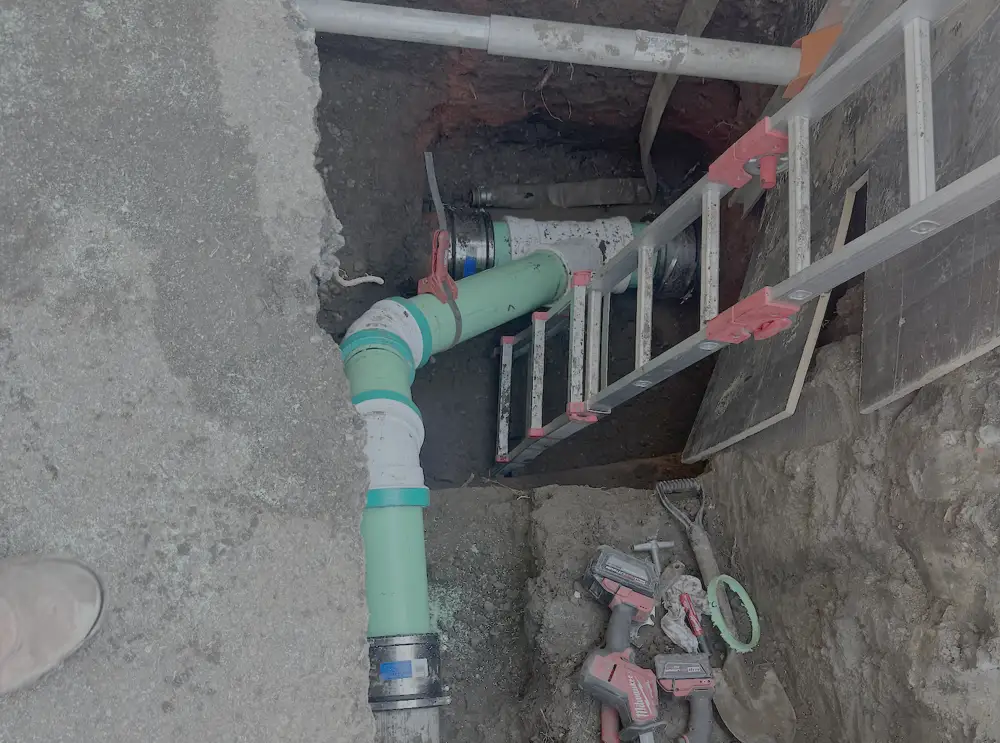
- Cracks and broken joints along the run. This is the pipe that takes in groundwater every storm, and replacing it stops the water getting in. For the private-property portion of the lateral, our replacements typically run $6,500 to $9,500, depending on conditions and scope. The sewer lateral replacement cost guide has the rest of the numbers.
- No cleanout. Without one it's harder to get a camera or a cutter into the line. If we're already digging for a repair, that's the time to add one. In Livermore, a permitted two-way cleanout on a single-family home also means the City maintains the pipe from the cleanout to the main.
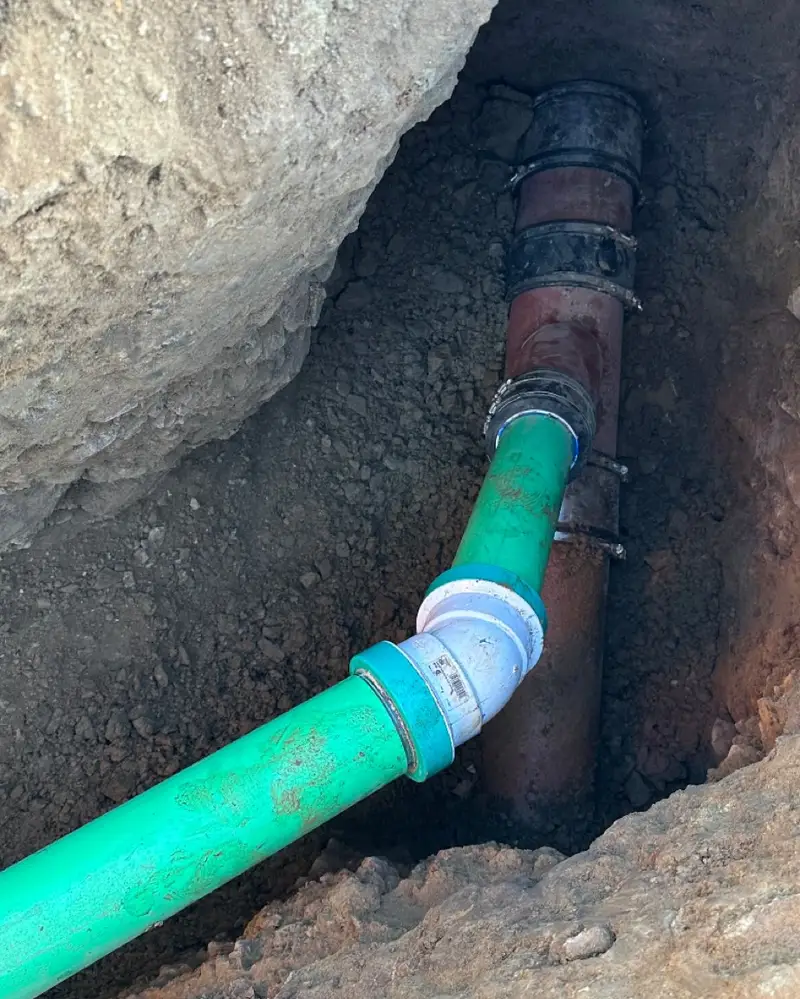
On a repair or replacement we pull the permits, schedule the inspections, coordinate with the city or sanitary district, and camera the new pipe again when it's in. See our sewer lateral replacement page for each agency's permit rules.
Backwater valves, overflow relief devices and cleanouts
These three get mixed up, but they do different jobs. We install all three.
- Backwater valve. A one-way valve on the building sewer. Sewage flows out of the house but can't flow back in, which protects fixtures that sit low.
- Overflow relief device. A cap on the outside cleanout that pops off when the line backs up, so sewage spills out in the yard instead of coming up inside the house. It doesn't stop the backup. It decides where the backup comes out.
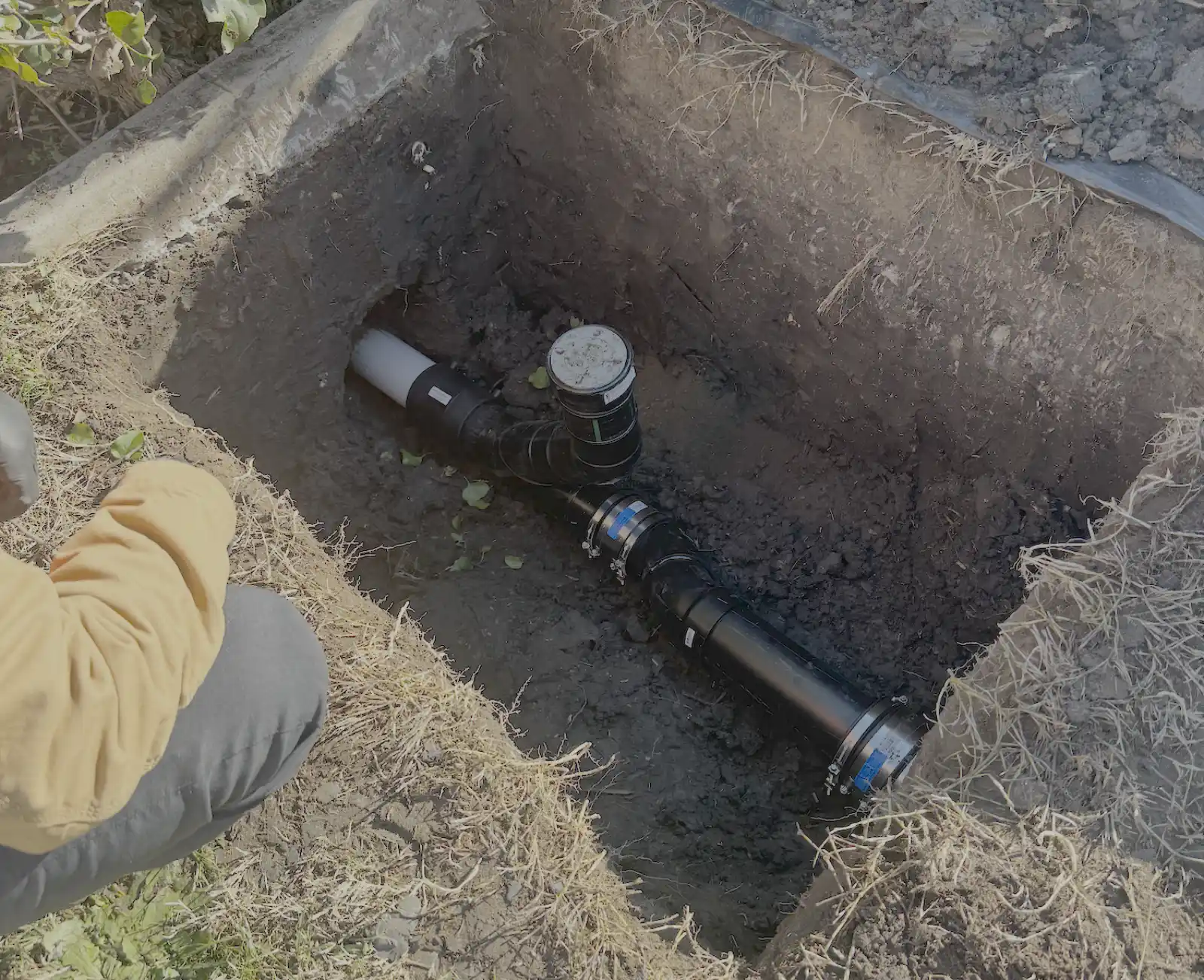
- Cleanout. A capped opening on the sewer line, near the house or at the property line, so the line can be cameraed and cleared without going through the house. On its own it doesn't stop a backup.
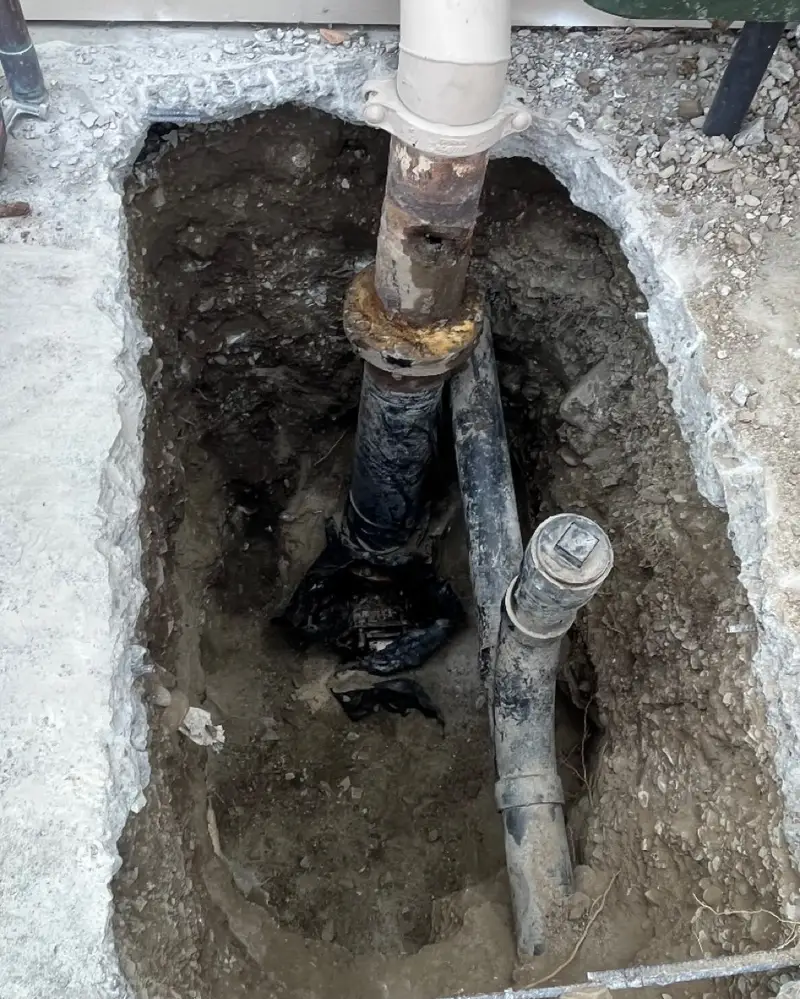
A backwater valve is the one the plumbing code talks about. The 2025 California Plumbing Code (section 710.1) requires an approved backwater valve on fixtures installed on a floor lower than the next upstream manhole cover of the sewer. Fixtures above that level don't need one and shouldn't drain through it (CPC 710.1).
Some local rules go further:
- Hayward. If the lowest fixture or outlet in a building sits below the rim of the nearest upstream manhole, cleanout or riser, the City requires an approved backwater valve or overflow device on the building sewer (Hayward sewer specifications).
- Castro Valley. CVSan requires a backwater prevention system (a check valve, a two-way cleanout and an overflow device on the cleanout) after sewage from the main has backed up into the building, when more than half of the building sewer is repaired or replaced, and when a cleanout is installed or replaced near the foundation (CVSan Code 3807). If your Castro Valley house has already backed up once, plan on it.
- Oro Loma Sanitary District. District standards require a backflow prevention system whenever a lateral is repaired or replaced (Oro Loma).
- Dublin. DSRSD suggests installing an overflow protection device if you don't have one (DSRSD).
If you have a garage bathroom, a laundry room a few steps down or a downstairs unit, compare where those fixtures sit with the manhole cover up the street. If they're lower, a valve may be required, not just a good idea. If you already have one, Triple-I describes a valve that is "properly installed and maintained", so have it checked too.
Will insurance pay?
Usually not under a standard homeowners policy. Triple-I says sewer backups "are not covered under a typical homeowners insurance policy," and that the coverage is bought as a separate product or as an endorsement (Triple-I). Flood insurance can be different. FEMA's FloodSmart site says the cause of flooding matters: a flood policy would cover water damage from a sewer that backed up during a heavy rainstorm, but not damage from a backup caused by clogged pipes (FloodSmart). Before the next storm, check your homeowners policy for a "water backup" or "backup of sewers or drains" endorsement and its limit, and if you carry flood insurance, ask your agent how it treats a rainstorm backup.
Common questions
Rain and groundwater get into the sewer through cracks, loose joints and storm connections, and fill the main or your lateral past what it can carry. A lateral with roots or a partial blockage can also cope in dry weather and fail once flows go up.
A blocked or overflowing public main is the city or sanitary district's job, so call them first. The lateral from your house to the main is usually yours in Alameda County. In Hayward, Castro Valley, San Lorenzo, San Leandro, Union City, Fremont, Dublin and Pleasanton, the owner's part runs all the way to the main.
Get the lateral on camera and fix what it shows, take any downspout, sump pump or yard drain off the sewer, and find out whether your lowest fixtures need a backwater valve.
Usually not unless you've added a sewer or water backup endorsement. A flood policy may cover a backup caused by a heavy rainstorm but not one caused by clogged pipes, so check what you carry.
It's different for every house. Triple-I lists aging sewer systems, rain overloading the pipes, tree roots and blockages in the city main. In a storm, rain getting into the pipes is the one to rule out first.
Get the lateral looked at before the next storm
We repair and replace sewer laterals and install backwater valves, overflow relief devices and cleanouts in Hayward, Castro Valley, San Leandro, Union City, Fremont, Dublin, Pleasanton and Livermore. If the district has cleared its main and you're still backing up, call (650) 532-4866 or request an estimate. If Orlando misses your call, he'll call you back within 10 minutes. Tell us your address and when the backups happen, and we'll tell you which district you're on and what to check first.
Next Level Plumbing Services, CA Lic. #1084094 (C-36 Plumbing). Sewer agency rules checked at the source on 20 Nov 2026; confirm with your city or district before you start work.